Introduction
Arrival and departure times are big moments every day. They set the tone for learning, friendship, and safety. In a #Montessori classroom, these routines help children feel calm, seen, and ready to learn. Good routines also build strong partnerships with #parents and make transitions easier for everyone.
Why it matters:
1) Children do better when they know what will happen next. Predictable routines lower stress and help kids focus on #transitions into play and learning. See ideas for calm rooms and schedules in Building a calm classroom.
2) Strong arrival and departure habits support secure relationships. For more on building attachments in group care, read Building secure attachments in group care.
State note: state requirements vary - check your state licensing agency for sign-in, staff ratios, and reunification rules.
How do Montessori arrival routines help children feel safe and ready?
When families arrive, the Montessori approach uses short, respectful rituals that make the child feel welcome and able to take part. The goal is: the room and the routine do most of the work so children learn to be independent.
Try a simple 3-step arrival routine (from ChildCareEd on attachment and Montessori transition ideas):
- 🙂 Greet: A warm hello using the child’s name.
- 🔢 1–2 quick actions: Put bag on hook, check name tag, or place a note in a cubby.
- 📚 Offer a calm choice: Free table activity, book corner, or a short morning tub.
Why this works:
- Children know the steps and can do them by themselves over time.
- Short actions build small wins and independence.
- Families get a clear, fast way to say goodbye.
Use visuals or a small sign-in board so non-readers can see what comes next. A sample visual schedule idea is available at Free Printable Visual Schedule For Preschool. These small supports lower anxiety and start the day in a calm way.
What steps make Montessori drop-off calm and predictable for families?
Drop-off can be hard for families and kids. Montessori ways focus on short goodbyes, consistent signals, and a welcoming start. The idea is to reduce waiting and long farewells so children can join the group quickly. For practical scripts and strategies, see From Tears to Cheers and Easing Drop-Off Anxiety.
Try a drop-off plan you can teach parents and staff:
- 📌 Tell parents the routine: where to hang coats, where to leave notes, and the quick goodbye signal.
- 😊 Use a short goodbye ritual (secret handshake, sticker, or a 30-second hug).
- 🎵 Use a consistent signal like a bell or a short hello song that means: time to start. See Montessori transition signals in Montessori Transitions That Actually Work.
Common mistakes and how to avoid them:
- 🚫 Mistake: Long, drawn-out goodbyes. Fix: Keep it short and loving.
- 🚫 Mistake: Changing the routine often. Fix: Teach the same steps each day.
- 🚫 Mistake: Leaving families unsure. Fix: Share the plan at orientation and in a quick parent note. For ideas on parent partnerships try Beyond the Daily Report.
How can we make departures and reunification smooth and secure?
Pick-up is a reunion. It should be calm, clear, and safe. Montessori programs make a simple process so children know what to expect and staff can manage reunification safely.
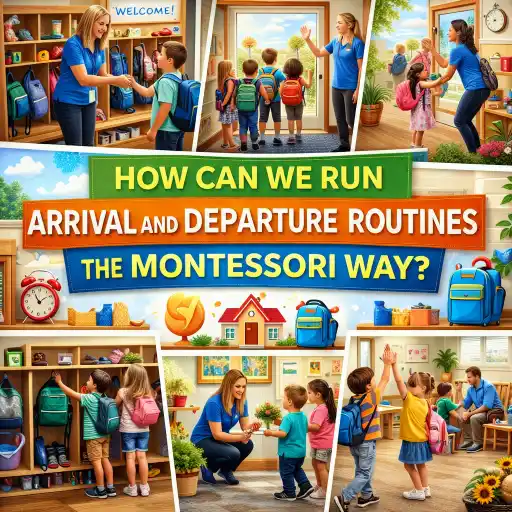
Steps for a clear departure routine:
- 📋 Sign-out system: Keep an accurate sign-in/out sheet. Templates and tips are on pages like Daycare Sign In Sheet Samples.
- 🔔 Use a reunification spot: One place for parents to wait and one place to collect children prevents crowding and confusion.
- 🧑🤝🧑 Teach a goodbye script: “Hello, I’m glad you’re here. Today we... Now we will go together.”
- 📞 Communicate: If someone else picks up, verify with a password or written note. Keep emergency contact info in your Go-Bag; see Your Emergency Go-Bag.
Practical tip: Practice pick-up drills with staff so everyone knows roles. Keep reunification instructions visible and share them at orientation. Remember: state requirements vary - check your state licensing agency for rules about sign-in/out and release.
How do we support children who struggle with separation or transitions?
Some children need extra time or helpers. Montessori strategies offer small, respectful supports. The goal is to teach skills so children can succeed at transitions.
Support steps (from attachment and Montessori transition ideas):
- 🧸 Transitional object: Let the child bring a small comfort item or a family photo.
- 👫 Buddy and helper roles: Give the child a helper job or pair them with a calm peer.
- ⏳ Short practice separations: Start with brief visits and build up time slowly (as suggested in NAMC tips).
- 🗣️ Use simple language: “First hang your coat, then choose a puzzle.” Montessori “First–Then” language reduces worry (see Montessori Transitions).
Common tools you can try:
- 🔁 Visual schedule cards for arrival and departure (visual schedule).
- 📬 Morning Message Card Exchange for stronger family links (see ChildCareEd transitions resource).
- 📝 Check-in routine for children who need extra support (simple behavior report or short greeting with a trusted adult). A Check-In/Check-Out idea is explained at Study.com.
Conclusion
Montessori arrival and departure routines are simple, respectful, and predictable. They help children feel safe, build trust with adults and families, and support independence. Start small: pick 2–3 clear steps for arrivals and departures, teach them well, and use visuals and short scripts. Share the plan with families so everyone knows what to do.
Final checklist (quick wins):
- ✅ Teach a 3-step arrival routine.
- ✅ Use a short goodbye ritual and a clear signal.
- ✅ Keep sign-in/out organized and follow local rules.
- ✅ Offer small supports for children who struggle.
Need more ideas? ChildCareEd has practical articles and resources on Montessori transitions, attachment, and calm classroom setup. A few helpful reads: Montessori Transitions That Actually Work, From Tears to Cheers, and Building a Calm Classroom. Use them with your team and families to create kinder, calmer #arrival and #departure times.
