Why do children bite, hit, or #play roughly in the first place?
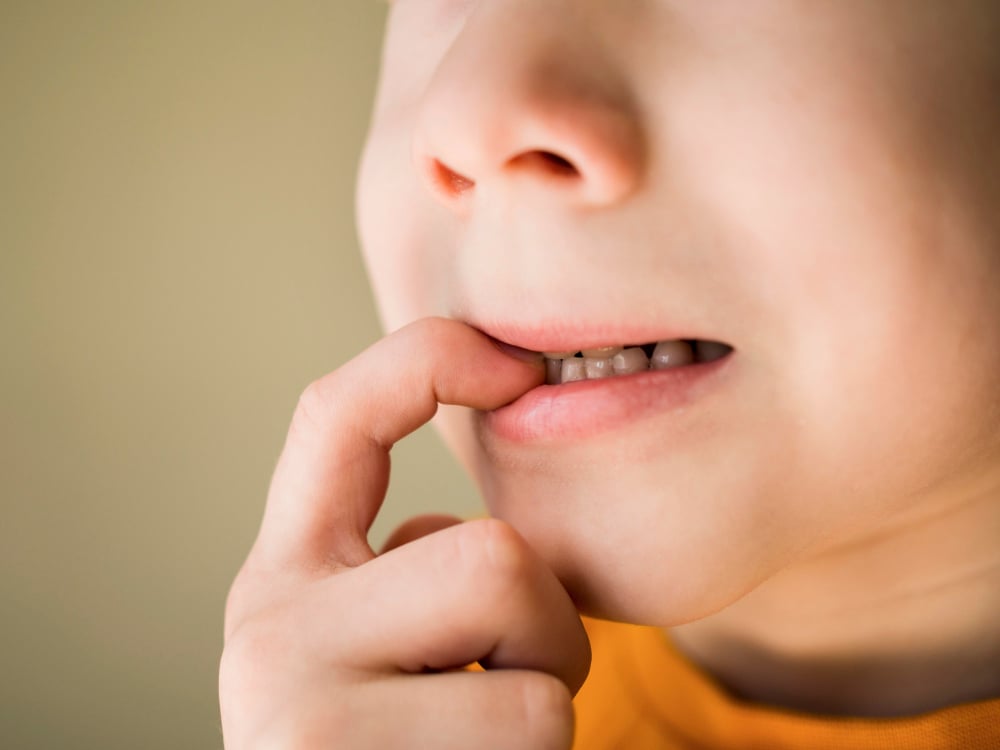
Most of the time, these behaviors happen because children are still #learning important skills. They may be saying:
- “I’m mad!”
- “I want that!”
- “I’m excited!”
- “I don’t have the words yet.”
- “My body needs movement.”
In Montessori, we start with observation. We watch for patterns:
- When does it happen (before lunch, during transitions, in a crowded area)?
- Where does it happen (blocks, dramatic play, line-up)?
- What happened right before (a toy grab, waiting, loud noise)?
This helps you choose the right support instead of using the same response for every child.
What should you do in the moment to stop biting or hitting #safely?
Use a calm, quick response. Keep your words short (especially for #toddlers).
- Step in fast and get close.
- Block the behavior (use your hand/arm as a gentle barrier).
- Help the child who was hurt first.
- Say one clear limit: “I won’t let you hit. Hitting hurts.”
- Give the replacement: “Use gentle hands,” or “Say ‘stop’.”
- Move the child to a safe spot with you nearby (not as a punishment—just to reset).
Tip: Long lectures usually do not work in the moment. Save teaching for later when the child is calm.
How can Montessori help you prevent these behaviors in your environment?
Montessori calls this the prepared environment. A few small changes can prevent many big problems:
- Add duplicates of favorite materials (so fewer fights happen)
- Create clear spaces with rugs/shelves (so children don’t crash into each other)
- Offer big movement every day ( #outdoor-play, pushing, carrying, climbing—safe and supervised)
- Keep wait times short (transitions are a common trigger)
- Stay close during “hot spots” (blocks, trucks, water table)
A Montessori-style calm space can also help. ChildCareEd’s #free Peace Corner Buy Now $0.00 resource is designed to support self-regulation and conflict resolution in a calm, child- #centered way
Age-by-age Montessori guidance
What works best for infants (0–12 months)?
Infants explore with their mouths. Some “biting” is really teething or sensory exploration.
Try this:
- Offer safe teething items (if your program allows)
- Watch for tired/hungry times
- Stay very close during peer play (infants grab faces and hair quickly)
- Model gentle touch: “Soft hands.”
If an infant bites:
- Calmly remove them and say, “No biting. Gentle.”
- Offer a safe chew item right away.
- Comfort the child who was hurt.
What works best for young toddlers (12–24 months)?
This is a peak time for biting and hitting because toddlers:
- want control
- move fast
- have limited words
Montessori-friendly supports:
- Give simple words: “Mine,” “Help,” “Stop,” “Turn.”
- Teach “gentle hands” with short practice moments each day.
- Offer choices: “Do you want the red ball or blue ball?”
- Use real-life, hands-on work (Practical Life) to build calm focus.
If a toddler bites/hits:
- Keep it simple: “I won’t let you bite. Biting hurts.”
- Move them with you to reset.
- Practice a replacement right away: “Try ‘help,’” or show the “stop” hand.
What works best for older toddlers (2–3 years)?
Older toddlers can start learning simple social skills (“grace and courtesy” in Montessori).
Focus on teaching:
- How to ask for a turn
- How to say “no” safely
- How to wait with support
Helpful tools:
- A small feelings chart
- A timer for turns
- Short role-play: “What can you say when you want it?”
If rough play happens often:
- Offer more “ #heavy-work” (carrying #books, pushing a cart, wiping tables)
- Add more outdoor time
- Reduce crowding in popular areas
What works best for #preschool (3–5 years)?
Preschoolers can learn more problem-solving, but they still need help when emotions are big.
Montessori strategies that help a lot:
- Clear class rules stated positively: “We use gentle hands. We keep bodies safe.”
- Grace and courtesy lessons: how to greet, how to ask, how to solve a conflict
- Peace tools: breathing, a calm corner, a peace rose/talking object (one person speaks at a time)
When a #preschooler hits or #plays too roughly:
- Stop it: “I won’t let you hurt.”
- Name the goal: “You want a turn.”
- Teach the script: “Say, ‘Can I have a turn when you’re done?’”
- Practice later when calm (that’s when learning sticks).
What works best for kindergarten and #early elementary (5–7 years)?
At this age, rough play may be part of “testing strength” or group games. Children can handle more reflection.
Try:
- Create clear game rules before play starts
- Teach consent words: “Stop,” “No,” “I don’t like that.”
- Use problem-solving meetings: “What happened? What can we do next time?”
- Separate “wrestling play” from school play (many programs choose “no wrestling” for #safety)
If aggression continues:
- Track patterns and triggers
- Partner with the family
- Consider extra support through your program’s process
What should you say to families about biting and hitting?
Keep communication calm, factual, and kind:
- What happened (briefly)
- What you did for safety
- What will you do to prevent it
- What replacement skills are you teaching
A helpful related ChildCareEd article to share with families or #staff is: Why kids bite (and what to do about it)
Which Montessori4Teachers courses can help you feel more confident?
If you want more step-by-step help, these Montessori4Teachers trainings connect well to safe guidance, observation, and #classroom-setup:
- Mindful Supervision: Balancing Safety & Independence in Montessori
 Buy Now $24.00
 - Raising Peaceful Learners: The Montessori Advantage Buy Now $16.00
- Mastering Observation Techniques in the Montessori Classroom Buy Now $16.00
Want more quick tips for your classroom each week?
Follow ChildCareEd on social for practical ideas and training updates (and share with your team!): https://linktr.ee/childcareed
And remember: children are not giving you a hard time—they are having a hard time. With calm limits, practice, and the right environment, biting, hitting, and rough play usually improve significantly.
