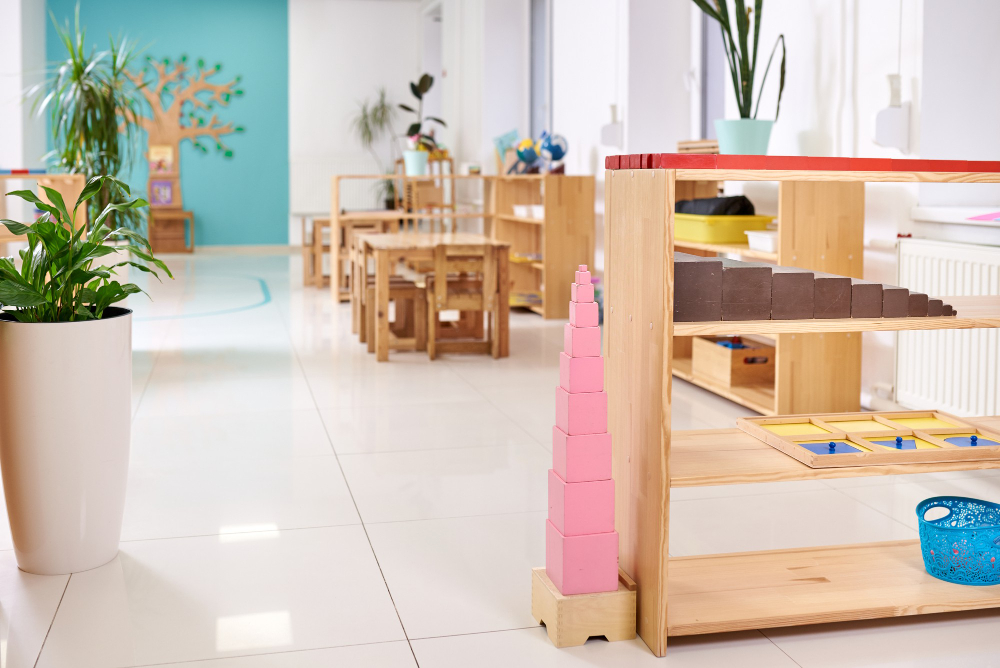
 Imagine walking into your #classroom first thing in the morning — the sunlight spilling over shelves, the quiet hum of possibility in the air. Now, pause and think: If your classroom could talk, what would it say about the children who learn there?
Would it whisper stories of curiosity and independence? Would it reflect calm, order, and care? Or would it sound more like, “Help! There’s too much stuff in here!”
In the Montessori world, the classroom isn’t just a backdrop — it’s an active participant in learning. Dr. Montessori called it the Prepared Environment, a space intentionally designed to #nurture independence, concentration, and joy. The environment is the third #teacher, after the adult and the child, and when it’s thoughtfully arranged, it speaks volumes.
🌿 The Classroom as a Mirror
A truly prepared environment mirrors our respect for each child’s individuality and #freedom. Every choice — from the placement of materials to the tone of lighting — tells children, You are capable. You are trusted. You belong here.
When materials are accessible, children don’t need to ask for permission to explore — they simply act. When shelves are organized, they know exactly where to find what they need — and how to return it. When the environment feels calm and beautiful, it whispers, “You are #safe. You can focus. You can create.”
This is the heart of the Mastering the Montessori Prepared Environment  Buy Now $16.00 course. It’s all about transforming your space into a reflection of respect and trust — not by filling it with more materials, but by designing it with purpose. You’ll discover how every element of your classroom can quietly support independence, exploration, and #growth.
✨ The Silent Voice of Order
Montessori #educators know that children crave order — not because adults demand it, but because it helps them make sense of their world.
When everything has a place, children can focus on doing rather than searching. They know where to begin, what to expect, and how to succeed. That’s why even something as simple as a pouring exercise in Practical Life can become a symphony of confidence and control.
One lovely example is found in the Practical Life: Pouring with Purpose Buy Now $0.00 resource. The exercise looks simple — two pitchers, a small tray, maybe some dry beans or water. But what it teaches runs deep: patience, precision, and pride in one’s work.
If your classroom could talk while a child poured carefully from one jug to another, it might say:
“Look at how capable they are. Look how focused. This is learning in motion.”
🌈 Freedom Within Structure
A well-prepared environment offers freedom — not chaos. Children move, explore, and choose — but within clear, respectful boundaries. That’s what makes Montessori #classrooms feel both alive and peaceful.
For a family-facing explanation of this balance, see what parents need to know about freedom within limits.
If you’ve ever stepped into a space where children are working quietly, helping one another, and genuinely loving what they’re doing, you’ve heard what a Montessori #classroom-sounds like when it’s “speaking.”
It says:
“Here, children #lead. Adults guide. Everyone grows.”
And that sense of purpose doesn’t happen by accident — it’s cultivated through observation, reflection, and thoughtful preparation.
The article The Montessori Classroom: Fostering Independence and a Love for Learning beautifully explores this idea. It reminds educators that independence and joy come not from control, but from trust — from environments where children have the freedom to make meaningful choices.
🪴 A Quick Reflection Exercise for You
Take a walk through your classroom — slowly, as if seeing it for the first time.
Ask yourself:
-
Can a child find what they need without help?
-
Is the space calm and inviting, or cluttered and distracting?
-
Do the materials reflect the diversity, interests, and abilities of the children you serve?
-
Does the environment invite movement, exploration, and concentration?
These small observations reveal what your classroom is already saying — and what it might be trying to tell you to change.
💬 If It Could Speak…
If your classroom could talk, it might say:
“I am a reflection of how deeply you believe in children’s potential.”
Every material, shelf, and tray is a conversation — between the child and the world, between curiosity and confidence, between guidance and independence.
When you prepare your classroom with intention, you’re not just decorating a space — you’re designing an experience. You’re creating a world where learning feels natural, where every child is seen, and where independence blooms quietly in the background.
So next time you tidy a shelf, lay out a tray, or adjust a table height, pause and listen. Because your classroom is speaking — and it’s saying something beautiful.
👉 To bring that message to life, explore the Mastering the Montessori Prepared Environment Buy Now $16.00 course. Pair it with Practical Life: Pouring with Purpose Buy Now $0.00 for hands-on inspiration, and read The Montessori Classroom: Fostering Independence and a Love for Learning for deeper reflection.
Together, they’ll help you #craft a classroom that doesn’t just look beautiful — it feels beautiful, too. For more inspiration, follow ChildCareEd on Instagram
