Why do “big kid vs. little kid” conflicts happen in mixed-age #classrooms?
Mixed-age groups can feel like a family. Older children often want to #lead, and younger children often want to copy. But conflicts can pop up when children feel:
- “You’re too little—go away!”
- “You can’t tell me what to do!”
- “That’s my work!”
- “You’re doing it wrong!”
Sometimes older children become bossy instead of helpful. Sometimes, younger children touch #materials before they are ready. And sometimes, both children just want the same thing at the same time.
Montessori classrooms are designed to help older children mentor, and younger children #learn, but we still need to teach children how to do this with respect. 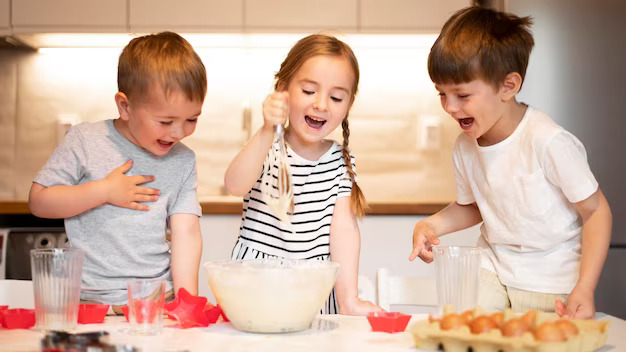
How does Montessori prevent power struggles in the first place?
Montessori works best when the classroom runs on two big ideas:
- Respect for every child
- Freedom with clear limits
In a calm Montessori room, children should not have to “fight” for space, attention, or materials. The environment helps children feel safe, capable, and included.
A helpful training that focuses on mixed-age success is Montessori Essentials: Mixed-Age Mastery  Buy Now $16.00. It teaches strategies for mixed-age instruction and support for every child.
What can you teach before conflicts start?
Montessori #teachers don’t wait for a big problem. They teach “Grace and Courtesy” lessons #early and often.
Here are simple skills to practice during calm moments:
- How to watch someone’s work without touching
- How to ask: “May I join you?”
- How to say no kindly: “No, thank you. I’m working.”
- How to take turns: “You can have it when I’m done.”
- How to offer help (without taking over): “Would you like help?”
Try short role- #play lessons. Keep them fun, fast, and repeat them many times. This builds #Montessori social skills in a way children can actually use.
For deeper support with Grace, Courtesy, and Peace Education, a great course is Raising Peaceful Learners: The Montessori Advantage Buy Now $16.00. It covers Grace and Courtesy and how Peace Education supports conflict resolution.
How can you set up the classroom to reduce “big vs. little” problems?
Many conflicts happen because the room setup makes conflict easy. A Montessori “prepared environment” makes peaceful work easy instead.
Use these simple checks:
- Clear work spaces: rugs/ #mats and defined table areas
- One work = one child: teach children to wait, not grab
- Easy-to-reach shelves: children can get and return work by themselves
- Enough duplicates (when needed): especially for high-demand items
- Child-sized tools: so younger children don’t need to “take” from older children
When your room is calm and organized, children don’t need to control each other.
If you want step-by-step help with room design, try The Prepared Environment: Montessori Class Design Buy Now $16.00. It explains how the environment supports independence and access for all children.
What should you do in the moment when conflict starts?
Montessori teachers try not to “be the judge.” Instead, they coach children to solve problems respectfully.
Try this simple 4-step script:
- Pause and get close. (Calm body, calm voice.)
- Say what you see: “I see you both want the bead frame.”
- Name the limit: “We use gentle hands. We do not grab.”
- Offer a next step: “Who had it first? What is your plan for taking turns?”
If an older child is being rough or mean, step in quickly for #safety. But after safety is handled, return to teaching, not blaming.
This is #PeaceEducation in action—children learn that problems can be solved without shouting or pushing.
How do you help older children be #leaders without being bossy?
Older children love to feel important. That can be a strength—if we guide it.
Teach older children the “helper rules”:
- Ask first: “Do you want help?”
- Show, don’t take: demonstrate slowly, don’t grab materials
- Use kind words: “You can try it like this.”
- Know when to stop: if the younger child says “no,” the helper steps back
You can also give older children real leadership jobs that do not control other kids, like:
- shelf straightener
- plant helper

- line leader (with teacher support)
- material checker (making sure pieces are complete)
This helps older children feel proud without pushing others around.
How can a Peace Corner prevent repeat conflicts?
Some children need a safe place to calm down before they can solve a problem. A Peace Corner gives them that space.
A helpful #free resource is Peace Corner Buy Now $0.00. It’s designed to support self-regulation, emotional #awareness, and conflict resolution in a calm, child- #centered way.
Simple Peace Corner items can include:
- a small soft mat or chair
- a feelings chart with pictures
- a calm-down bottle or #sensory item
- a “breathing card” (smell the flower, blow the candle)
- a peace rose (or another object children hold while taking turns speaking)
Teach Peace Corner use when children are calm, not only when they are upset.
What routines help big kids and little kids feel like one community?
Mixed-age harmony grows when children feel they belong together.
Try routines like:
- Morning greeting: children practice friendly hellos
- Short community meetings: talk about kindness and classroom care
- Buddy moments: older children read a book to younger children (with choice)
- Small group lessons: so younger children aren’t always “chasing” older work
Remember: Montessori mixed-age groups work best when older children learn leadership and younger children learn confidence—side by side.
What if the same conflict keeps happening?
Repeat conflicts are a clue. Ask yourself:
- Is this happening at the same time every day (like transitions)?
- Is a certain material causing lots of waiting or grabbing?
- Does a child need more Grace and Courtesy practice?
- Does the classroom layout need a small change?
Even one small change can reduce conflict fast.
For more Montessori-specific ideas on peace and social harmony, you can also share this ChildCareEd article with your team: Peace Education and Grace and Courtesy in Montessori Education.
Want more Montessori tips each week?
Follow ChildCareEd on Pinterest for practical classroom ideas you can use right away: https://www.pinterest.com/ChildCareEd/ (and share your favorite pins with your teaching team!).
