Academic Success and Montessori Outcomes: A Path to Lifelong Learning
Montessori education is widely regarded as a pioneering approach to early childhood education, emphasizing the #development of the whole child—intellectually, socially, and emotionally. Montessori classrooms focus on fostering academic success through child-centered, self-directed learning environments. For educators seeking practical training, ChildCareEd offers courses such as Montessori Made Simple Buy Now $35.00 and Montessori Foundations  Buy Now $10.00 that explain core principles and classroom practices.
This article examines Montessori's impact on academic outcomes, social-emotional development, and long-term life skills, and compares Montessori with traditional education approaches to help practitioners apply these ideas in early childhood settings.
How does Montessori support academic success and measurable outcomes?
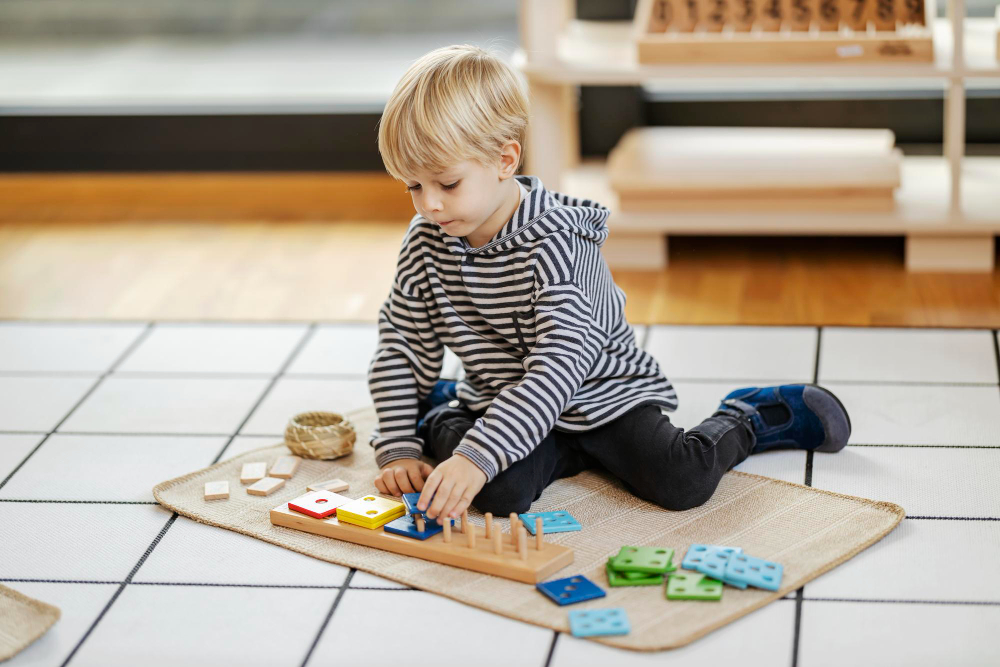
In a Montessori classroom, #students are encouraged to work at their own pace, using hands-on materials designed to help them discover key concepts independently. This approach supports deeper understanding and retention of knowledge, leading to impressive academic outcomes.
- Hands-on learning: Montessori students engage with materials that promote active learning, making abstract concepts tangible.
- Self-paced learning: Children are #free to explore subjects that interest them and progress according to their individual development rather than a standardized curriculum.
- Critical thinking: Montessori methods emphasize problem-solving, critical thinking, and independent learning, providing students with the tools they need for academic success.
Research has shown that Montessori students consistently perform at or above the level of their peers in traditional education systems, particularly in subjects like mathematics and reading.
How does Montessori develop social and emotional skills?
Montessori education is not just about academic success—it places a strong emphasis on the development of social and emotional intelligence. By encouraging children to take responsibility for their actions, collaborate with peers, and #express themselves #freely, Montessori classrooms help foster positive emotional and social development.
- Conflict resolution: Students learn how to resolve conflicts independently, a critical life skill.
- Collaboration: Montessori classrooms often feature multi-age groups where older students mentor younger ones, promoting teamwork and #empathy.
- Self-regulation: By providing an environment where children make choices about their learning, they develop emotional resilience and self-control.
What long-term life skills and attitudes do students gain from Montessori?
One of the most significant advantages of Montessori education is its focus on preparing children for life beyond school. The skills and attitudes they develop in Montessori classrooms continue to serve them throughout their lives.
- Independence: Children are encouraged to make choices and take responsibility for their actions, building confidence and self-reliance.
- Intrinsic motivation: The Montessori approach fosters an internal desire to learn, which translates into a lifelong love of learning.
- Problem-solving: Montessori students are encouraged to solve problems on their own, fostering critical thinking and decision-making skills that will benefit them in all areas of life.
These life skills are not just academic but encompass social, emotional, and personal #growth, contributing to well-rounded individuals who are prepared to tackle the challenges of the future.
How does Montessori compare with traditional education approaches?
While both Montessori and traditional education aim to foster academic achievement, the methods and outcomes often differ. Here’s a comparison:
- Student-Centered vs. Teacher-Led: Montessori education is student-centered, giving children autonomy over their learning. Traditional education tends to be more #teacher-led with set lessons and curriculum.
- Hands-on Learning vs. Lecture-Based Learning: In Montessori, learning is experiential and hands-on. In traditional settings, learning is often lecture-based with textbooks and worksheets.
- Focus on Social Skills: Montessori places a significant emphasis on social and emotional learning, while traditional classrooms may focus more on individual academic achievement.
- Assessment: Montessori schools typically use observational assessments to track development, while traditional schools rely on standardized testing.
Montessori students tend to develop a deeper love for learning, higher levels of creativity, and greater social-emotional maturity compared to their peers in traditional systems.
Where can I read more about Montessori practices and find training and resources?
- What is Montessori? — A concise primer on Montessori principles and the child-centered approach. For clarification of frequent misunderstandings that parents and educators have, see our article on common misconceptions about Montessori education.
- The Montessori Classroom: A World Designed for Discovery — Practical examples of how the prepared environment supports learning.
- Unlock the Power of Montessori — Case studies and classroom vignettes showing Montessori in practice.
- How do we apply Developmentally Appropriate Practice in mixed-age groups? — Guidance for mixed-age group instruction, a common Montessori configuration.
- How do early language skills affect a child's success in school? — Research and strategies for supporting language development in early childhood.
- How motor skills shape child development — Techniques to integrate fine and gross motor development into Montessori activities.
At Montessori4Teachers we are dedicated to supporting #educators who want to implement Montessori principles in their classrooms. Explore our Montessori Assistant training program Buy Now $250.00 to learn more about how to create a Montessori-inspired learning environment that fosters academic success, social and emotional growth, and lifelong learning.
For more insights into Montessori education, check out our additional articles and resources designed to empower #early-childhood-educators.
How can I follow ChildCareEd for more Montessori resources?
Stay up-to-date with the latest news, articles, and resources on Montessori education by following us on our social media platforms:
- Instagram: @childcareed
- Pinterest: ChildCareEd
- Facebook: ChildCareEd
- TikTok: @childcareed
- X: @childcareed
By following us, you’ll gain valuable insights into Montessori education, tips for success in the classroom, and much more!
Summary/Conclusion: What are the key takeaways and next steps for educators?
Summary: Montessori education supports academic progress by enabling children to engage with concrete materials, work at individualized paces, and practice sustained concentration. Equally important are the social-emotional competencies that Montessori classrooms intentionally develop: conflict resolution, empathy, self-regulation, and collaborative problem-solving. For practitioners, action steps include setting up a prepared environment with accessible materials, scheduling uninterrupted work cycles, and using observation-based assessment to guide individualized lessons. To measure impact, use an observational checklist, collect family feedback, and track small-step academic gains over a term; review results quarterly and adjust materials or lesson focus accordingly. Consider ChildCareEd training such as Montessori Assistant Training Buy Now $250.00 to build practical classroom skills and The Prepared Environment Buy Now $16.00 for design strategies. Verify any regulatory or registry acceptance with your licensing or professional development agency before assuming course credit.
Practical classroom tips: 1) Begin with clear, simple routines that enable independence; 2) Offer choices within limits so children learn responsibility; 3) Use mixed-age groupings to promote peer teaching and leadership; 4) Build family partnerships by sharing the rationale for Montessori practices. These steps help translate Montessori philosophy into measurable outcomes in your program. #Montessori #development #assessment #independence #inclusion
- Implementing the Montessori Curriculum
- Montessori Unveiled: Demystifying the Method for Parents
- Montessori Foundations
- Understanding Montessori's Approach to Child Development
- Math Foundations in Early Childhood
- Engaging Parents in the Montessori Toddler Classroom
- Intro to Montessori: Philosophy, Principles, and Practices
- Raising Peaceful Learners: The Montessori Advantage
