When parents step through your doors for a tour, they are not simply viewing a space and its materials; they are encountering your educational philosophy in practice. A Montessori tour is your opportunity to demonstrate, not just explain, how children learn, move, and grow in your environment. Below are tips for making that tour magical, memorable, and meaningful.
How Can You Welcome Families and Build a Connection?
Before discussing the curriculum or classroom materials, greet families warmly. Offer a simple snack or water, and invite them to linger in a common space for a few moments. Use this time to share your mission and values:
-
“Here, we see children as capable, curious, and ready to contribute.”
-
“Our goal is to prepare an environment that guides children, rather than directs them.”
A relaxed opening creates time to establish trust and frame the visit as a collaborative partnership.
How Can the Prepared Environment Guide the Tour?
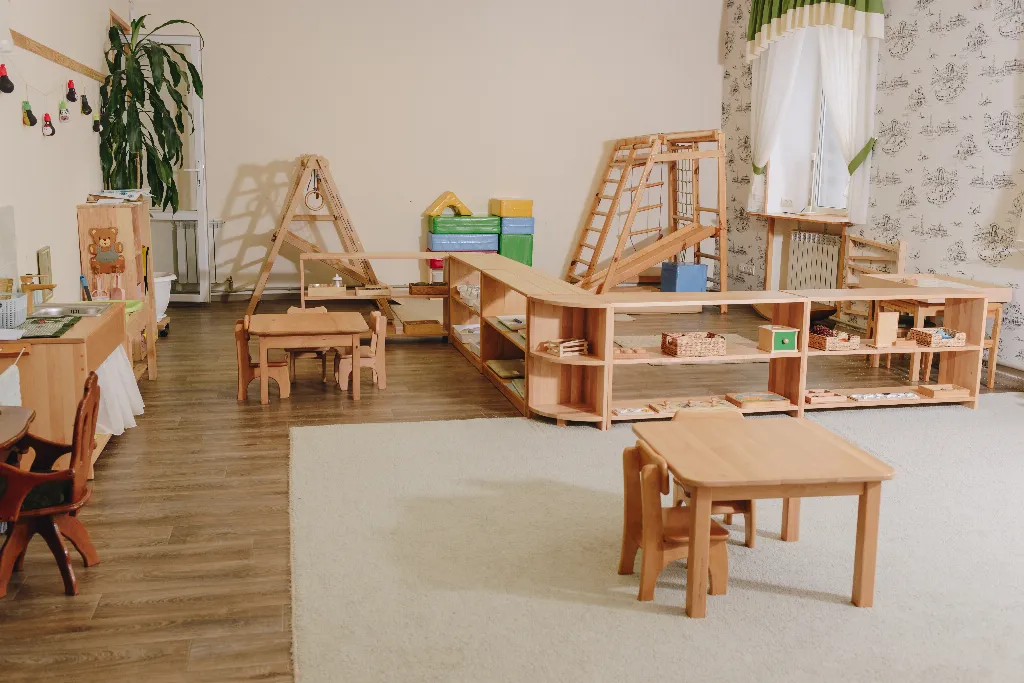
Montessori philosophy centers on the prepared environment  Buy Now $16.00, a space deliberately designed to support children’s independence and learning. To give families context for what distinguishes this approach, you can direct them to a comparison of Montessori and traditional preschool. In fact, there’s a whole course called The Prepared Environment: Montessori Class Design Buy Now $16.00 that dives deep into how to set up environments that offer choice, accessibility, and flow.
As you walk through, point out:
-
How shelves are low and materials are within children’s reach
-
Clear labeling, open baskets, and logical order
-
Gentle transitions between areas (practical life, sensorial, #language, #independence)
-
Opportunities for children to self-correct or self-check their work through #observation
Rather than simply explaining Montessori, demonstrate its principles in practice.
How Can Observation Make Learning Visible?
Whenever possible, schedule tours during active work periods. Ask parents to quietly watch children at work and then reflect on what they saw. Questions you might pose:
-
“What do you notice about how that child is choosing their work?”
-
“How do you see concentration or problem-solving happening?”
-
“What do you observe about the child’s connection to the materials?”
Let children’s behavior and engagement make learning visible rather than relying solely on verbal explanation.
How Can You Use Stories to Explain Children’s Learning?
Stories bring your philosophy to life. During the tour, you might say:
“Yesterday, a 3-year-old spent 20 minutes pouring grains from one container to another, fully absorbed. That small act is helping them build focus, muscle control, and confidence.”
Stories like this help parents see daily Montessori life in action. It’s more convincing than any slogan. When explaining why Montessori emphasizes the whole child, share how its approach considers multiple areas of development.
How Can You Explain the Rationale Without Overwhelming Families?
Families often seek to understand the rationale for classroom practices. As you guide families through the classroom, incorporate concise explanations:
-
Choice & independence: “Each child can choose work that interests them. This autonomy supports self-motivation.”
-
Order & beauty: “We keep our materials neat and beautiful — this order helps children focus.”
-
Intrinsic motivation: “We avoid external rewards; children’s own satisfaction is their reward.”
If parents want deeper background, explain how Montessori's history and principles inform the choices they see in the classroom. You can also suggest they explore courses like Mastering the Montessori Prepared Environment (by Montessori4Teachers) for a fuller understanding of how environment design supports Montessori values. montessori4teachers.com Buy Now $16.00
How Can You Structure the Tour With Intention?
Structure your tour with a narrative arc:
-
Welcome & mission
-
Practical life / care of self
-
Sensorial / cognitive materials
-
Language / #math / cultural
-
Outdoor or movement area
-
Q&A in a comfortable space
At each “stop,” pause, engage, and invite curiosity. Don’t rush.
How Can You Prepare for Questions About the Program?
Families often use a tour to assess both educational fit and the reliability of a program’s day-to-day practices. Prepare concise, accurate explanations of your schedule, staffing roles, family communication practices, enrollment process, and how educators respond when a child needs additional support. Describe what your program actually does; distinguish a written policy from an informal classroom routine, and avoid promising an outcome for an individual child. If families are also thinking about predictable routines beyond the classroom, you can share ideas for creating a peaceful Montessori rhythm at home.
Before the visit, identify who can answer questions about tuition, meals, illness procedures, guidance, and enrollment. If a question involves licensing or a program policy you cannot verify on the spot, say so and follow up with the applicable written information or official agency contact. This is more credible than guessing. Ask families which topics matter most to them, and make space for differences in culture, language, family structure, and prior experience with group care.
Offer practical next steps, such as a second visit, a conversation with the lead educator, or a review of the family handbook. Explain what the family can expect after the tour and when they should expect a response. Clear follow-through shows that partnership continues beyond the initial visit.
How Can You Protect Children’s Privacy During a Tour?
A classroom visit should respect the children who are already learning there. Set expectations before families enter: visitors should remain with the guide, avoid interrupting work, and not photograph or record children unless the program has explicitly authorized it and all applicable permissions are in place. Do not share a child’s name, family circumstances, developmental records, or identifiable story as a tour example. Use de-identified descriptions and choose examples that do not allow a visitor to infer a child’s identity.
Plan the route and timing with staff so supervision remains active and children can continue their routines. If a child seeks interaction, respond naturally while maintaining the group’s privacy and safety. When a tour coincides with a sensitive routine, such as toileting or a family conversation, adjust the route rather than treating access to every room as a requirement. These boundaries demonstrate that respect for children is part of the program’s practice, not simply a tour message.
How Can You Make the Tour Accessible and Responsive to Families?
Ask about access needs and preferred communication before the visit, without assuming what a family requires. Offer available interpretation or translated materials when possible, and identify accessible routes and places to sit. Use concrete examples and pause for questions rather than relying on specialized Montessori terminology. If you use terms such as “work cycle,” “practical life,” or “control of error,” briefly explain what families can observe and why it matters.
Invite caregivers to connect classroom practices to their own priorities and knowledge of the child. Some families may value independence; others may first want to understand emotional support, belonging, routines, or how educators communicate concerns. Listen without treating questions as objections. A responsive tour explains the program while making clear that families bring expertise about their children and are partners in the relationship.
How Can You Follow Up After the Visit?
Close by confirming the family’s preferred method of contact and the next step they requested. Send only the materials discussed, such as enrollment information, a family handbook, or answers to outstanding questions, and protect personal information in any follow-up communication. A short, individualized message can recap the family’s questions and clarify who will respond. If the family is comparing programs, offer factual information rather than pressure; their decision should be informed and voluntary.
Use a brief staff debrief to improve future tours. Note which questions were difficult to answer, whether the route supported observation without disrupting learning, and whether the visit accommodated the family’s stated needs. Update tour materials when policies or classroom practices change, and ensure every staff member who leads tours can explain the same core information accurately. This process turns each visit into an opportunity to strengthen communication and program consistency.
How Can You Conclude the Tour?
At the end of your tour:
-
Invite questions and reflections
-
Ask: “What stuck out to you? What concerns or curiosities do you have?”
-
Offer follow-up: newsletters, sample activities, observation days
You want parents to walk away feeling seen, heard, and excited — not sold.
What Should Families Take Away From the Tour? (Summary)
A well-crafted Montessori tour is more than a demonstration; it makes #learning visible. It’s an invitation for parents to see children as independent agents, to feel the calm, purposeful flow of your space, and to imagine their child growing in that rhythm. When your environment speaks for itself, when stories resonate, and when parents feel part of the journey, you don’t just showcase Montessori — you share an experience they want for their child.
