Montessori & You: Is This Teaching Approach the Right Fit?
Choosing a teaching philosophy is an important step in any educator’s professional journey. Your philosophy influences how you organize the classroom, introduce lessons, respond to children, and measure progress. If you are considering Montessori education, it is helpful to understand its central principles and determine whether they align with your teaching style, values, and professional goals.
Montessori education emphasizes independence, hands-on exploration, purposeful classroom environments, and respect for each child’s natural developmental pace. Educators who are new to the method can begin with Understanding Montessori’s Approach to Child Development  Buy Now $55.00, which explores Montessori’s developmental theories, planes of development, milestones, and educational philosophy. The Implementing the Montessori Curriculum Buy Now $32.00 course offers additional guidance for applying Montessori principles in mixed-age and inclusive classrooms.
Do You Value Child-Led Learning?
Montessori classrooms prioritize children’s independence, choices, and active participation in learning. Rather than directing every activity, educators prepare appropriate choices, introduce materials carefully, observe children’s responses, and provide support when needed.
Children are given freedom within clear and consistent limits. They may select activities according to their interests and readiness, complete work at their own pace, and repeat an activity until they feel confident. This structure allows children to develop concentration, responsibility, decision-making skills, and confidence.
Educators who enjoy guiding children without controlling every part of the learning process may appreciate this approach. For a broader explanation of its central ideas, read What Is Montessori? Understanding the Child-Centered Approach.
Do You Prefer Hands-On, Experiential Learning?
Montessori education relies heavily on hands-on materials and real experiences. Children manipulate objects, explore textures, pour liquids, sort items, practice fastening clothing, count physical objects, and complete practical tasks.
These experiences help children understand abstract ideas through concrete action. A child may physically arrange number rods before working with written numerals, for example, or trace textured letters before writing them independently.
Hands-on learning can support:
-
Fine-motor development
-
Coordination and balance
-
Concentration
-
Problem-solving
-
Independence
-
Early mathematics and literacy
-
Sensory awareness
Educators who believe children learn best through movement, exploration, and meaningful practice may feel comfortable in a Montessori environment. Learn more in The Importance of Hands-On Learning in Montessori Education.
Do You Value a Peaceful and Respectful Classroom?
Montessori classrooms are often calm, orderly, and intentionally arranged. Children learn to respect themselves, other people, classroom materials, and their surroundings.
Respect is demonstrated through daily interactions. Educators use calm voices, model courteous behavior, allow children time to respond, and avoid unnecessary interruption. Children also learn how to carry materials carefully, return activities to their proper places, wait for materials that are being used, and resolve social conflicts respectfully.
This atmosphere does not mean children are expected to remain silent or inactive. Instead, movement and conversation are purposeful. Clear routines help children understand how to work independently while remaining part of a classroom community.
Read The Montessori Classroom: Fostering Independence and a Love for Learning for a closer look at how classroom design and respectful guidance work together.
Do You Believe in Individualized Learning?
Children do not develop every skill at exactly the same age or pace. Montessori education recognizes these differences by allowing children to progress according to their readiness instead of expecting everyone to complete identical work at the same time.
An educator may introduce a new activity to one child, offer more practice to another, and provide an advanced variation to a third. These decisions are based on careful observation rather than age alone.
Individualized learning requires educators to:
-
Observe children consistently
-
Record meaningful information
-
Recognize developmental readiness
-
Match materials to current needs
-
Adjust the level of challenge
-
Avoid rushing children
-
Provide support without creating dependence
Educators who enjoy differentiating instruction and responding to individual learning patterns may find Montessori practice especially rewarding.
Are You Comfortable Being a Guide Rather Than the Center of Instruction?
In many traditional classrooms, the teacher presents lessons to the entire group, controls the pace, and determines when each activity begins and ends. Montessori educators take a different role.
The Montessori educator observes, prepares, demonstrates, and guides. Lessons are often brief and presented individually or to a small group. Once the educator introduces a material, the child receives time to explore, repeat, and master the activity independently.
This requires the educator to know when to help and when to step back. Offering too much assistance can interrupt concentration or prevent children from solving problems independently. Providing too little support can leave a child frustrated.
Montessori educators also avoid depending heavily on prizes and external rewards. The goal is to help children experience satisfaction from concentration, discovery, effort, and mastery. Understanding Intrinsic Motivation in Montessori Education explains how the method supports children’s internal desire to learn.
Do You Believe in the Importance of a Prepared Environment?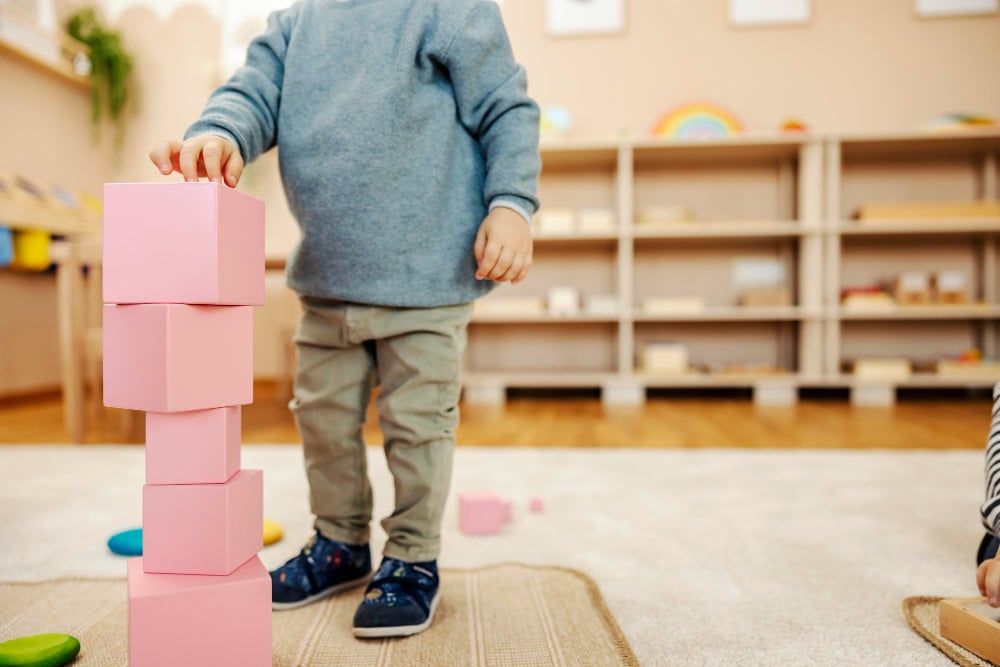
The prepared environment is one of the most recognizable parts of Montessori education. The classroom is deliberately arranged so children can move, make choices, use materials, and care for the space with increasing independence.
A prepared Montessori environment commonly includes:
-
Child-sized tables, chairs, sinks, and tools
-
Low, open shelves
-
Complete activities displayed on trays or in baskets
-
Clearly defined learning areas
-
Natural and attractive materials
-
Uncluttered spaces
-
Materials arranged from simple to complex
-
Accessible cleaning and self-care supplies
Every material should have a clear purpose and designated location. Children learn to select an activity, carry it to a workspace, use it appropriately, and return it for the next person.
Educators who enjoy designing organized, attractive, and purposeful learning environments may find this aspect of Montessori especially appealing. The free Core Montessori Principles Poster provides a helpful visual reminder of the ideas that shape Montessori practice.
Do You Have Patience and a Growth Mindset?
Montessori educators trust the developmental process. They understand that meaningful growth may happen gradually and that children often need repeated practice before mastering a skill.
This approach requires patience. An educator may need to demonstrate the same routine several times, quietly observe before intervening, or allow a child to work through a manageable mistake. The focus is not simply on producing a perfect final product. The process of concentrating, experimenting, correcting, and trying again is equally important.
A growth mindset also applies to the educator. Montessori practice involves continuous observation, reflection, classroom adjustment, and professional learning. Teachers must be willing to reconsider their routines and respond to what children’s behavior reveals.
How Would Montessori Change Your Daily Teaching Practice?
Montessori can significantly change how an educator uses time throughout the day. Instead of relying mainly on whole-group lessons, the educator spends more time preparing the environment, presenting short lessons, observing individual children, and adjusting materials.
Daily responsibilities may include:
-
Checking that activities are complete and inviting
-
Rotating materials according to children’s interests and readiness
-
Giving individual or small-group presentations
-
Recording observations
-
Protecting uninterrupted periods of work
-
Modeling practical-life and social routines
-
Supporting children without taking over
-
Communicating progress to families
Planning remains important, but it looks different. Rather than preparing one activity that every child must complete simultaneously, the educator plans the classroom environment and sequences individual lessons according to observed readiness.
How Can You Transition From a Traditional Classroom?
Transitioning to Montessori practice does not need to happen all at once. A gradual process is often more manageable for educators, children, colleagues, and families.
Begin with one area of the classroom. You might create a practical-life shelf with a few simple pouring, transferring, sorting, or cleaning activities. The free Montessori Practical Life Activity offers an accessible example that supports focus, coordination, and independence.
You can then:
-
Reduce clutter and remove incomplete materials.
-
Place selected activities on low, accessible shelves.
-
Introduce each activity through a short demonstration.
-
Establish a consistent routine for returning materials.
-
Allow children enough time to repeat their work.
-
Record brief notes about engagement and progress.
-
Add or adjust activities based on those observations.
As children become familiar with the routines, educators can gradually introduce additional Montessori practices. Professional training can help staff understand why these changes matter and how to use materials correctly.
Which Montessori Courses Can Help You Get Started?
The following training options can help educators build foundational knowledge and translate Montessori principles into classroom practice:
Montessori Assistant Training Buy Now $250.00
This comprehensive course prepares classroom assistants to support children, lead teachers, families, and the prepared environment. It addresses child development, Montessori philosophy, classroom organization, independence, and professional communication.
Understanding Montessori’s Approach to Child Development Buy Now $55.00
This six-hour course examines Montessori’s view of child development, including the planes of development, developmental domains, early milestones, and connections between theory and classroom practice.
Implementing the Montessori Curriculum Buy Now $32.00
This four-hour course focuses on practical curriculum implementation, mixed-age instruction, Montessori learning areas, and inclusive strategies for children with diverse abilities and needs.
Before relying on any course to meet a licensing, credential, or employer requirement, confirm that it is accepted by the appropriate agency or organization. State requirements vary, so always check with your state licensing agency.
What Free Montessori Resources Can You Use?
Educators can reinforce their learning with practical classroom resources:
-
Core Montessori Principles Poster: A visual overview of foundational Montessori concepts, including respect, independence, hands-on learning, and the prepared environment.
-
Montessori Practical Life Activity: A simple activity that encourages concentration, coordination, independence, and meaningful responsibility.
-
Montessori 4 Teachers Free Resources: A growing collection of classroom materials and visual references for Montessori educators.
Is Montessori the Right Match for You?
Montessori may align with your teaching philosophy if you enjoy:
-
Facilitating child-led exploration
-
Observing before intervening
-
Preparing organized and purposeful spaces
-
Supporting children’s independence
-
Using hands-on materials
-
Individualizing instruction
-
Respecting each child’s developmental pace
-
Giving brief lessons followed by independent practice
-
Encouraging internal motivation instead of relying on rewards
The approach may initially feel less comfortable if you strongly prefer tightly scripted lessons, frequent whole-group instruction, identical assignments, or complete teacher control over pacing. However, training, observation, and gradual classroom changes can help educators develop confidence with a more child-centered role.
What Should Your Next Steps Be?
Begin by observing a Montessori classroom or studying examples of authentic practice. Notice how educators present materials, redirect behavior, protect concentration, and decide when to introduce new lessons.
Next, consider completing an introductory course such as Montessori Assistant Training Buy Now $250.00 or Understanding Montessori’s Approach to Child Development Buy Now $55.00.
You can also keep a short observation log. Record three focused notes for each child over a two-week period. Pay attention to:
-
Materials the child selects
-
Activities the child repeats
-
The length of concentration
-
Problems the child attempts to solve
-
Moments when assistance is requested
-
Signs that the child is ready for a new challenge
These observations can help you determine how Montessori principles affect children’s engagement and whether the approach feels natural and sustainable within your teaching practice.
Educators considering advanced professional study may also read My Experience in Loyola’s Master’s in Montessori Education Program, which shares a practitioner’s perspective on graduate study and professional growth in Montessori education.
Ultimately, determining whether Montessori is the right fit requires reflection, observation, and experience. When your values include respect, independence, hands-on discovery, careful observation, and trust in children’s developmental abilities, Montessori education may be an excellent match for you.
- Montessori Education and DEI: Fostering Inclusive Learning Environments
- Unlocking the Power of Practical Life: A Montessori Foundation
- Exploring Montessori Materials: Essential Tools
- Unlocking Your Path to Montessori: The Ultimate Guide to Becoming an Educator
- Montessori & You: A Perfect Match?
- 🍂 What Makes September So Special in Montessori? 🍎
- Why Gen Z Parents are Choosing Montessori Over Traditional Preschools
- How Leaf Shapes Teach More Than You Think
- What Does October Offer to Montessori Childrens Learning?
- What Does It Mean for the Adult to Be a Guide in Montessori?
- How Can You Refresh Your Practical Life Area for Today’s Montessori Classroom?
- Could the Montessori Approach Be Your Child-Care Superpower?
- Top 10 Things You’ll Only Understand If You’re a Montessori Teacher
- The Hidden Curriculum of Order: What Clutter Teaches Without Words
- Helping, Not Hovering: Supporting Toddlers During Everyday Tasks
- 🎨 The Role of Art in Montessori Education: Creativity, Confidence & the Joy of Making
- Why Montessori Training Benefits Child Care Professionals
- When a child won’t choose work: what Montessori suggests
- Teaching Self-Care Skills (Coats, Shoes, Toileting) the Montessori Way
