Introduction: What is a Montessori work cycle and why does it matter?
A Montessori work cycle is an uninterrupted block of time when children choose and do hands-on "work" for deep learning. Dr. Montessori found that long, quiet blocks of time help children build #concentration and confidence. You will often see a 2–3 hour morning period in many Montessori classrooms, though shorter blocks work for toddlers and babies. See a clear description at What is a Montessori Work Cycle?.
Why it matters:
1. Children learn to finish tasks and repeat them until they master a skill.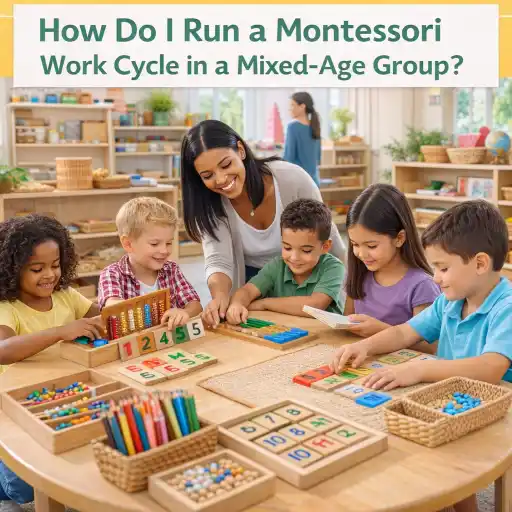
2. Mixed-age groups create a classroom family where older children teach younger ones and younger children learn by watching. Read about benefits of mixed-age classrooms at Benefits of Mixed Age Groups and practical tips on Working with Mixed Age Groups.
In this article you will get a simple, step-by-step plan for running a calm, respectful #workcycle in a #mixedage classroom so your children gain #independence and love learning. Also: state requirements vary - check your state licensing agency.
How long should the work cycle be and how do I organize time for mixed ages?
Start with a clear length and routine. Montessori classrooms often protect a long morning cycle. A good plan for mixed ages is:
- 🕘 Arrival + quiet choice (10–20 minutes): children settle, choose a tray or shelf item.
- 📚 Main uninterrupted work period (60–120 minutes): deeper work happens here. For preschoolers a 2–3 hour block is ideal; for very young children shorten the block. Read why uninterrupted cycles help concentration at Nurturing Concentration and the classic notes on the three-hour cycle in AMI guidance.
- 🍎 Snack/outside break (15–30 minutes): a clear break helps reset energy.
- 🔁 Short second work period or small-group time (30–60 minutes) if needed.
Tips for timing with mixed ages:
- 🔢 Number your groups. Example: 1 = toddlers, 2 = preschoolers, 3 = older preschool. Use these groups for safety limits (like climbing or small parts).
- ✅ Offer the same long cycle for all, but accept that each child uses the time differently.
- 📋 Use routines: lay out mats, pick work, return work. Predictable steps make the block succeed. ChildCareEd has setup ideas in The Montessori Classroom: A World Designed for Discovery.
Keep instructions short and use visuals for children who need them. A visual schedule helps younger children know what to expect and supports independence.
How should the classroom be prepared so all ages can use the work cycle well?
The prepared environment is key. A clear, calm room supports choice, self-help, and safety. Follow these steps:
- 🏷️ Low, organized shelves: place a few activities per shelf so children focus. ChildCareEd shows practical room setup ideas at Montessori Classroom Ideas for Child Care Providers.
- 🧺 One work set: have one set of each main material so children learn to wait, take turns, or observe — this builds social skills and self-control as explained in AMI guidance.
- 🔒 Safety zones: create areas for messy or gross-motor play and quiet areas for focused work. Mark them with rugs or low shelves.
- 🪑 Child-sized tools: small pitchers, brooms, spoons, and trays let children do real tasks. See practical life ideas in Montessori Classroom Ideas.
- 📦 Rotate materials: keep interest high by rotating one shelf each week. Use a simple rotation log to track what’s out and what’s stored.
Why these steps help mixed ages:
1. Younger children find safe choices they can manage.
2. Older children model and use advanced materials they already know.
3. The room itself teaches routines and respect for materials.
For more on preparing the space and why beauty and order matter, read Creating the Montessori Prepared Environment.
How do I guide, observe, and give lessons during the work cycle in a mixed-age group?
Your job is to observe, give short presentations, and protect work time. Use these steps:
- 👀 Observe first: spend time watching who chooses what. Note interests, skills, and who needs help. ChildCareEd recommends strong observation to plan lessons: Montessori Classroom Ideas and Professional Development resources Buy Now $0.00.
- 🎯 Give short, exact presentations: show one child or a small group how to use a material. Keep it brief and concrete.
- 🤝 Use peer teaching: older children can show younger ones. This builds leadership and helps older children master skills (see Learning in Layers).
- 🛡️ Protect the block: only interrupt for safety. If you must stop a child, give a 2–5 minute warning so they can finish a step.
- 📓 Keep simple records: 1–2 notes per child per week help plan presentations and track progress. Use a journal or checklist (see sample lesson plan at Montessori Lesson Plan Buy Now $0.00).
How to balance presentations with supervision:
- 1 teacher + 1 assistant is ideal for larger mixed-age groups. If you have one adult, schedule quick presentations at the edges of the work cycle.
- Use small-group times and label them: 1 = new presentations, 2 = review, 3 = practical life. This keeps you available to each level.
For training ideas and course options, see Wings of Independence Buy Now $35.00 and Montessori vs. Traditional Preschool.
How do I manage routines, transitions, and common mistakes to protect the work cycle?
Good routines make transitions smooth and protect focus. Here’s a step-by-step plan and common pitfalls to avoid.
- 🔔 Start with simple morning routines: greet, put away belongings, and choose a work. Use visuals for children who need them.
- 🧭 Give 2–3 clear transition cues: a soft chime, a picture countdown, and a two-minute warning help children finish calmly.
- 🍽️ Plan snack and outside time so they do not break the main cycle. Put them in the middle as planned breaks.
Common mistakes and how to avoid them:
- ⚠️ Mistake: Too many materials out. Fix: Limit shelves to 6–10 works. Rotate weekly.
- ⚠️ Mistake: Over-teaching or giving full-group lessons often. Fix: Use brief individual/small group presentations. Observe, then teach.
- ⚠️ Mistake: Not protecting time. Fix: Teach staff and families why uninterrupted work matters; post a short note for visitors. See research-backed ideas at What Is Maria Montessori Theory.
Be patient. Mixed-age classrooms take time to settle but give huge payoffs: leadership, cooperation, and deeper learning. For more practical classroom management tips see How to Manage a Classroom with Multiple Age Groups.
Conclusion: Quick checklist, FAQs, and next steps
Quick checklist to run a successful Montessori work cycle in mixed ages:
- ✅ Prepare low, simple shelves with limited materials.
- ✅ Protect a long, mostly uninterrupted work block each morning.
- ✅ Observe, give brief presentations, and encourage peer teaching.
- ✅ Use clear routines and transition cues; rotate materials.
- ✅ Train staff and remind families: state requirements vary - check your state licensing agency.
FAQ (short):
- Q: How long must the cycle be? A: Aim for 1–3 hours depending on age; toddlers need shorter chunks.
- Q: What if a child uses materials roughly? A: Re-teach the work, offer natural consequence (material put away), and model help from peers.
- Q: How many adults? A: 1 adult + assistant is best for larger mixed groups; smaller groups can manage with one thoughtful guide.
- Q: Can child care programs blend Montessori and other styles? A: Yes. Start with a few Montessori shelves and protect longer choice time; see blending tips at Montessori vs. Traditional Preschool.
Final encouragement: running a Montessori work cycle in a mixed-age group is doable with planning, clear spaces, and patience. You will see children grow in #independence, help each other, and enjoy deep learning. For trainers and extra resources, explore ChildCareEd's Montessori articles and courses like Montessori Essentials Mixed-Age Mastery  Buy Now $16.00 (course listing) and practical posts at ChildCareEd.
Hashtags: #Montessori #workcycle #mixedage #independence #concentration
