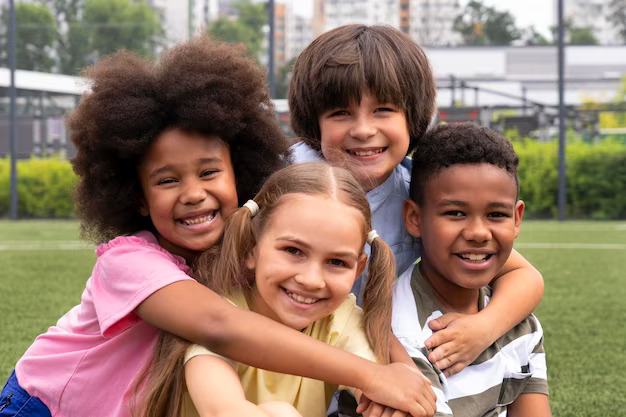
 In a Montessori #classroom, #language isn’t just a subject — it’s a bridge to #culture, identity, and community. When we cultivate bilingualism — especially honoring a child’s Spanish heritage — we’re doing more than teaching vocabulary; we’re helping children feel seen, respected, and capable in two worlds.
The Montessori Lens on Bilingualism
Maria Montessori taught us to follow the child — to support their natural impulses, interests, and #development. In communities where Spanish is spoken at #home, offering Spanish in the classroom is a way to #nurture that bridge rather than forcing assimilation.
Bilingual Montessori environments:
-
Empower children to express themselves fully — in whichever language they’re comfortable.
-
Deepen cultural pride and connection with their heritage.
-
Strengthen cognitive flexibility, as learning multiple #languages has been shown to support executive function and problem-solving skills.
-
Support inclusion and equity, ensuring children whose first language is Spanish aren’t marginalized or lost in translation.
Honoring bilingualism is especially important in diverse #classrooms, where learners come with different linguistic backgrounds. Educators seeking to strengthen their skillset in these spaces may explore professional development like Inclusive Montessori: Supporting Diverse Learners in the Classroom — a course designed to help #teachers #adapt Montessori methods to support children with a range of needs and backgrounds. Childcare Ed
This kind of deeper training helps teachers see how inclusive language practices, scaffolding, and differentiated support can build bridges — not walls — in learning.
Practical Ways to Honor Spanish Heritage in a Montessori Setting
Here are ideas you can weave into your classroom (and your communications with #parents) so that Spanish language and culture aren’t “extra,” but fully integrated.
1. Dual Labels & Language Materials
Label materials, shelves, and objects in both English and Spanish (e.g. “mesa / table”, “tijeras / scissors”). Over time, children may naturally shift between languages. Create language baskets or dual-language cards for children to explore.
2. Bilingual Story Corner
Dedicate a reading nook stocked with children’s #books in Spanish, English, and dual-language editions. Invite children and families to contribute favorite stories from home.
3. Cultural Work Cycles
During specific times (maybe weekly), offer works connected to Hispanic countries — maps, flags, musical instruments (maracas, rhythm sticks), recipes, traditional arts or #crafts. The children can explore geography, music, and food traditions that reflect Spanish-speaking #cultures.
4. Language Buddies & Peer Support
Pair children who are strong in Spanish with those learning, to encourage natural conversation or language exchange. Encourage children to teach simple words or songs to one another.
5. Morning Greetings & Pledges
Start the day with greetings in Spanish (“Buenos días, buenos días”), or short phrases children learn and repeat. Even design a short pledge or song in Spanish the class can say together.
6. Parent & Family Participation
Encourage Spanish-speaking parents or #grandparents to come in as guest readers, storytellers, or song #leaders. Host a “Spanish language day” where families bring cultural items or teach simple phrases.
A Fun Bilingual Classroom Activity
“Language Treasure Hunt: Spanish & English Match-Up”
Goal: Help children notice cognates, expand vocabulary, and make connections between languages.
Materials needed:
-
Pairs of cards: one in English, one in Spanish (for common classroom objects: “book / libro,” “water / agua,” “flower / flor,” etc.)
-
Small baskets or cloth bags
-
Sticker or token reward (optional)
How it works:
-
Before children arrive, hide the English and Spanish cards around the room (on shelves, tables, under rugs, etc.).
-
Tell the children there’s a special treasure hunt: their mission is to find matching pairs (English & Spanish).
-
When a child finds a card (say, “flower”), they search for its counterpart (“flor”) and bring them both to a gathering spot.
-
Once all pairs are found, gather and read them aloud together. Invite children to say the words in both languages.
-
For extension: challenge them to act out or find the real object in the room (e.g. point to a real flower).
This activity is tactile, #playful, and #leads to natural curiosity. Children often delight in seeing the connections between languages!
Final Thoughts
Bilingualism in a Montessori classroom isn’t an afterthought — it’s an #expression of respect, equity, and invitation. By weaving Spanish language and culture into the everyday environment — through labeling, stories, work choices, and shared experiences — you communicate to every child: your language matters here.
For #educators looking to deepen their practice in inclusive and multilingual classrooms, taking professional learning opportunities like Inclusive Montessori: Supporting Diverse Learners in the Classroom  Buy Now $16.00 can strengthen your ability to meet each child’s needs with grace and skill. Childcare Ed
👉 For more professional insights and practical tools, follow ChildCareED on social media and keep building your expertise in #early-childhood-education. #classroom-activity
- Implementing the Montessori Curriculum
- Montessori Foundations
- Understanding Montessori's Approach to Child Development
- Mastering Observation Techniques in the Montessori Classroom
- Sensitive Periods in Montessori: Guiding Natural Learning
- Intro to Montessori: Philosophy, Principles, and Practices
- Montessori Cultural Activities: Exploring the World Through Play and Learning
- Montessori Unveiled: Demystifying the Method for Parents
- Inclusive Montessori: Supporting Diverse Learners in the Classroom
- Raising Peaceful Learners: The Montessori Advantage
- Understanding Montessori’s Approach to Child Development
- Understanding Intrinsic Motivation in Montessori Education
- The Montessori Classroom: Fostering Independence and a Love for Learning
- Understanding the Sensitive Period for Language
- Montessori Magic at Home: Tips for Every Age
- Elementary Montessori: Fostering Curiosity & Responsibility
