Latest Blog & News in English

Understanding Uninterrupted Work Periods
03/11/2025In Montessori education, uninterrupted work periods—extended blocks of time—support deep engagement, concentration, and independent learning. ChildCareEd courses such as Mastering Observation Techniques in the Montessori Classroom and Montessori Assistant Training teach practical strategies for ... Understanding Uninterrupted Work Periods
.jpg)
Sensitive Periods in Child Development
02/25/2025What are sensitive periods and why do they matter? Maria Montessori, the founder of the Montessori method, introduced the concept of sensitive periods—critical phases in a child's #development when they are particularly receptive to learning specific skills. During these sensitive periods, ch... Sensitive Periods in Child Development
Control of Error in Montessori: Encouraging Independence Through Self-Correction
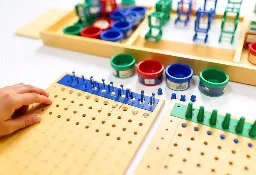
02/18/2025One of the most powerful principles in Montessori education is the Control of Error—a built-in feature of Montessori materials that allows children to recognize and correct their own mistakes without the need for adult intervention. This concept fosters independence, confidence, and problem-so... Control of Error in Montessori: Encouraging Independence Through Self-Correction
The Hidden Curriculum of Order: What Clutter Teaches Without Words
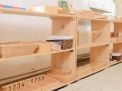
10/29/2025Walk into a Montessori #classroom at its best, and you’ll notice something before you even hear the soft hum of concentration or see the children working purposefully: order. Not the sterile, rigid order of “everything in its place or else,” but an intentional, living order —... The Hidden Curriculum of Order: What Clutter Teaches Without Words

The Pink Tower: A Montessori Classic for Early Childhood Development
02/18/2025What is the Pink Tower and why does it matter in Montessori classrooms? The Pink Tower is one of the most iconic materials in Montessori early-childhood education. Designed by Dr. Maria Montessori, it consists of ten pink wooden cubes that increase progressively in size. Though simple in form, the ... The Pink Tower: A Montessori Classic for Early Childhood Development

Hands-On Learning in Montessori Education
02/19/2025Montessori education is grounded in the idea that children learn best through direct experience and active #engagement with their environment. Dr. Maria Montessori linked movement and cognition: hands-on activities stimulate cognitive #development by letting children explore concepts through touch a... Hands-On Learning in Montessori Education

Incorporating Math Instruction in the Montessori Classroom
01/21/2025Montessori #classrooms are renowned for their hands-on, child-centered approach to education, and #math instruction is no exception. Grounded in sensori-motor pedagogy and the prepared environment, the Montessori method uses concrete, #sensory experiences to build foundational skills and a deep conc... Incorporating Math Instruction in the Montessori Classroom

Cosmic Education: Fostering Interconnected Learning in Montessori Elementary Classrooms
02/27/2025Montessori elementary education helps children understand the universe and their place in it. Central to this is Cosmic Education, a holistic framework that highlights interconnectedness and encourages responsibility.To support practical implementation, ChildCareEd offers professional development co... Cosmic Education: Fostering Interconnected Learning in Montessori Elementary Classrooms

The Absorbent Mind in Montessori Education
02/20/2025Dr. Maria Montessori, an Italian physician and #educator, introduced the concept of the "Absorbent Mind" to describe the remarkable capacity of young children to absorb information from their environment effortlessly. This innate ability is most pronounced from birth to around six years of age and s... The Absorbent Mind in Montessori Education

Montessori Math: Preparing Children for Abstract Thinking and Cognitive Development
02/10/2025The Montessori educational approach emphasizes a progression from concrete experiences to abstract reasoning. It aligns with children's natural cognitive #development and supports deep mathematical understanding and critical thinking. [REF-1] For practical training, see ChildCareEd's Math Foundation... Montessori Math: Preparing Children for Abstract Thinking and Cognitive Development
