Latest Blog & News in English

Understanding Intrinsic Motivation in Montessori Education
02/13/2025Intrinsic motivation refers to engaging in activities for the inherent satisfaction and joy they bring, rather than for external rewards or pressures. In education, fostering intrinsic motivation helps students become lifelong learners, driven by curiosity and a genuine love of discovery. Montessori... Understanding Intrinsic Motivation in Montessori Education

What Can Montessori Teach Us About Mindful Eating on World Food Day?
10/16/2025World Food Day is a wonderful opportunity to help children slow down, connect with what nourishes them, and appreciate the incredible journey that food takes before it reaches their plate. In the Montessori #classroom, food is never just food — it’s a chance for discovery, independence, ... What Can Montessori Teach Us About Mindful Eating on World Food Day?

Montessori Education vs. Traditional Preschool
01/21/2025When choosing an #early-childhood-education program, understanding the distinctions between Montessori education and traditional #preschool settings is crucial. Both approaches aim to foster child #development but differ in philosophy, #classroom-environment, teaching methods, and the teacher's role... Montessori Education vs. Traditional Preschool

The Importance of Hands-On Learning in Montessori Education
01/31/2025Montessori education, developed by Dr. Maria Montessori, emphasizes child-led, experiential learning. Central to this approach is hands-on learning, where children engage directly with materials and their environment. This method fosters deep understanding, independence, and a lifelong love for lear... The Importance of Hands-On Learning in Montessori Education
Why do Montessori Children Love Concentration?
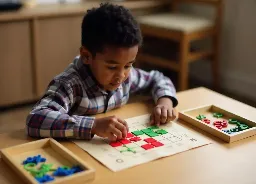
10/08/2025Do you ever wonder why children with Montessori training sometimes play so quietly — and so deeply? There’s a kind of magic in their silence: focused concentration, self-driven exploration, and joyful engagement. Quiet play is not about being “well-behaved” or holding still &... Why do Montessori Children Love Concentration?

The Importance of Active Play in the Montessori Classroom
01/27/2025In the Montessori #classroom, learning is often associated with calm, focused activities. However, active #play is just as essential to a child’s #development. Active play engages children’s bodies and minds, allowing them to develop #gross-motor skills, build social connections, and fos... The Importance of Active Play in the Montessori Classroom

Long-Term Benefits for Students: Montessori Education
03/04/2025Montessori education is well known for fostering independence, curiosity, and a love for learning. Beyond academics, it emphasizes life skills and the development of positive attitudes that last a lifetime. Montessori students build practical competencies — from problem-solving to adaptability... Long-Term Benefits for Students: Montessori Education

The History of Montessori
03/03/2025The Montessori method emphasizes independence, hands-on learning, and respect for a child's natural development. Early childhood professionals benefit from understanding the method's history and classroom practices. That knowledge guides the design of environments and clarifies adult roles in daily ... The History of Montessori
What Is Montessori in Child Care — and What Isn’t It?
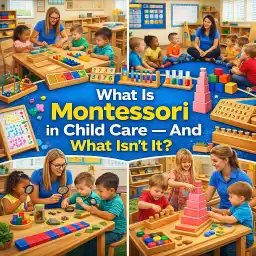
03/06/2026Introduction Montessori in child care is a way to set up the classroom, the teacher role, and the daily routine so children can learn by doing. In this article you will learn clear, practical answers that help directors and providers decide what Montessori looks like in a child care setting. Why i... What Is Montessori in Child Care — and What Isn’t It?

Understanding the Sensitive Period for Language
03/07/2025In Montessori education, the Sensitive Period for Language refers to a crucial phase from birth to six years old when children are especially receptive to learning #language. During this time, they naturally absorb sounds, words, and grammar from their environment, laying the foundation for effec... Understanding the Sensitive Period for Language
