Latest Blog & News in English

Harmony between school and home environments
03/05/2025In Montessori education, the harmony between school and #home environments is crucial for a child's holistic #development. When both settings align in principles and practices, children experience a seamless transition that fosters #growth, independence, and a love for learning. Understanding... Harmony between school and home environments

The Role of Collaboration and Project-Based Learning in Montessori Schools
03/05/2025Montessori education, founded by Dr. Maria Montessori in the #early 20th century, emphasizes child-centered learning, independence, and respect for a child's natural psychological #development. Two integral components of this educational approach are collaboration and project-based learning (PBL), w... The Role of Collaboration and Project-Based Learning in Montessori Schools
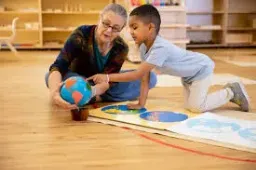
The Montessori Teacher as a Facilitator
03/04/2025In the Montessori #classroom, #teachers are often referred to as "guides" or "facilitators." Their primary responsibility is to create and maintain an environment that encourages exploration and discovery. Key aspects of this role include: Preparing the Environment: Teachers design #classrooms... The Montessori Teacher as a Facilitator
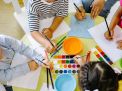
Developmentally Appropriate Practice in Montessori Education
02/24/2025Developmentally Appropriate Practice (DAP) is a framework grounded in research that guides #educators in making decisions that promote optimal learning and #development for children. In the context of Montessori education, DAP aligns closely with the method's core principles, emphasizing individuali... Developmentally Appropriate Practice in Montessori Education

Respect for the Child: A Foundational Belief in Montessori Education
02/21/2025One of the core principles of Montessori education is respect for the child. Dr. Maria Montessori, the founder of this educational approach, believed that children are naturally capable, curious, and deserving of the same dignity as adults. In a Montessori environment, respect for the child is demon... Respect for the Child: A Foundational Belief in Montessori Education
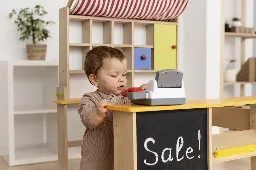
Montessori and Special Needs: A Holistic Approach to Inclusive Learning
02/14/2025Understanding Montessori Education for Children with Special Needs Montessori education is known for its child-centered approach, which makes it an excellent choice for children with special needs. Developed by Dr. Maria Montessori, this educational method emphasizes independence, hands-on learning... Montessori and Special Needs: A Holistic Approach to Inclusive Learning
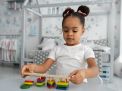
Understanding Practical Life Activities
02/13/2025Montessori education emphasizes the #development of practical life skills, which are everyday activities that help children gain independence and adapt to their environment. These activities are integral to the Montessori curriculum and #play a crucial role in developing both fine and #gross-motor s... Understanding Practical Life Activities

Individualized Learning Approaches in Montessori Classrooms
02/12/2025Montessori education is widely known for its individualized learning approach, which tailors instruction to each child's unique needs, interests, and learning pace. Unlike traditional #classrooms that follow a standardized curriculum, Montessori classrooms allow #students to explore subjects at thei... Individualized Learning Approaches in Montessori Classrooms

Montessori: Respect for the Child
02/11/2025Montessori education is built upon the fundamental principle of respect for the child. Dr. Maria Montessori believed that children are naturally eager to learn and that treating them with dignity fosters confidence, independence, and a lifelong love for learning. Respecting the child means recognizi... Montessori: Respect for the Child
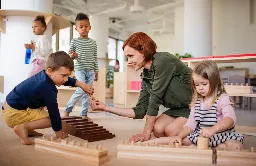
Montessori Education: Enhancing Listening, Comprehension, and Vocabulary Skills
02/10/2025The Montessori educational approach, #developed by Dr. Maria Montessori, emphasizes a child-centered learning environment that fosters natural #development. A key component of this method is the cultivation of #language-skills, particularly listening, comprehension, and vocabulary, which are foundat... Montessori Education: Enhancing Listening, Comprehension, and Vocabulary Skills
