Latest Blog & News in English

How To Think Like a Scientist — Even If Your Lab Partner Is Three
11/04/2025There’s something wonderfully unpredictable about doing “science” with #preschoolers. One minute they’re observing a leaf with total focus — the next, they’re wearing it as a hat. But that’s the magic of it, isn’t it? Science, at its core, is curiosity... How To Think Like a Scientist — Even If Your Lab Partner Is Three

Top 10 Things You’ll Only Understand If You’re a Montessori Teacher
10/28/2025Calling all Montessori guides, co- #teachers, assistants, and #early-childhood champions — this one’s for you! If you’ve ever found yourself nodding knowingly when someone says “work cycle” or quietly smiling as a child carries a tray without spilling a drop, then you... Top 10 Things You’ll Only Understand If You’re a Montessori Teacher

🕊 Why Are Montessori Classrooms a Model for Peace Education?
10/16/2025Have you ever walked into a Montessori #classroom during lunch or work time and been struck by how… peaceful it feels? No shrieking, no children flinging chairs, just focused little humans engaged in meaningful tasks. It’s like walking into a Zen garden staffed by #toddlers. There&rsquo... 🕊 Why Are Montessori Classrooms a Model for Peace Education?
How Does Neuroscience Support Montessori Learning?
10/15/2025If you’ve ever marveled at how peacefully focused a child can be while pouring water, sorting shells, or tracing sandpaper letters, you’ve witnessed something incredible — the brain in deep, joyful learning mode. Montessori #educators have known for over a century what modern neuro... How Does Neuroscience Support Montessori Learning?

Why Montessori Still Matters in a Fast-Paced World
10/09/2025In a world of scrolls, alerts, and instant everything, Montessori can feel like a gentle rebellion. It whispers: “Slow down. Trust the child. Let depth beat #speed.” And in doing so, Montessori holds a profound promise: children (and adults!) can grow from the inside out, not just keep u... Why Montessori Still Matters in a Fast-Paced World

What Does It Mean for the Adult to Be a Guide in Montessori?
10/09/2025In a Montessori environment, the adult’s role is fundamentally different from that in a traditional #classroom. Rather than being the central authority who “delivers” knowledge, the adult acts as a guide who supports the child’s self-directed learning. Montessorians sometimes... What Does It Mean for the Adult to Be a Guide in Montessori?

What Does “Follow the Child” Really Mean in Montessori?
10/06/2025You’ve probably heard the phrase “Follow the Child” countless times in Montessori discussions. It’s one of Dr. Maria Montessori’s most famous principles — but what does it really mean in practice? Does it mean children run the #classroom? That #teachers step back ... What Does “Follow the Child” Really Mean in Montessori?

How Does Montessori Nurture Young Bilingual Learners?
10/02/2025In a Montessori #classroom, #language isn’t just a subject — it’s a bridge to #culture, identity, and community. When we cultivate bilingualism — especially honoring a child’s Spanish heritage — we’re doing more than teaching vocabulary; we’re helping ... How Does Montessori Nurture Young Bilingual Learners?
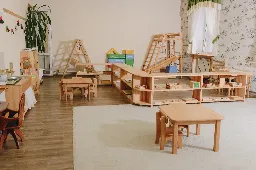
How to Showcase Montessori Philosophy During Child Care Tours
10/02/2025When #parents step through your doors for a tour, they’re not just visiting space and materials — they’re entering your philosophy in action. A Montessori tour is your opportunity to demonstrate, not just explain, how children learn, move, and grow in your environment. Below are ti... How to Showcase Montessori Philosophy During Child Care Tours

How to Support Sibling Relationships the Montessori Way
09/25/2025If you’ve ever had two or more children in the same room for more than five minutes, you know sibling relationships are a roller coaster. One minute, they’re laughing and building forts together. The next, they’re arguing over who gets the blue cup. While these ups and downs are ... How to Support Sibling Relationships the Montessori Way
