When choosing an #early-childhood-education program, understanding the distinctions between Montessori education and traditional #preschool settings is crucial. Both approaches aim to foster child #development but differ in philosophy, #classroom-environment, teaching methods, and the teacher's role. ChildCareEd offers targeted courses that help educators evaluate and apply Montessori principles, for example Montessori Made Simple Buy Now $35.00 and The Prepared Environment: Montessori Class Design  Buy Now $16.00. This article compares the two approaches, explains what to look for in practice, and links to practical ChildCareEd articles and courses you can use to strengthen classroom practice.
What are the educational philosophies of Montessori and traditional preschool?
- Montessori Education:
- Child-Centered Learning: Emphasizes self-directed learning where children choose activities based on their interests, promoting independence and intrinsic motivation.
- Holistic Development: Focuses on cognitive, social, emotional, and physical #growth, encouraging children to develop at their own pace.
- Traditional Preschool:
- Teacher-Directed Learning: Follows a structured curriculum with teacher-led activities, aiming to meet standardized educational milestones.
- Skill Development: Prioritizes academic skills, often with a focus on preparation for formal schooling.
How do classroom environments differ between Montessori and traditional preschool?
- Montessori Education:
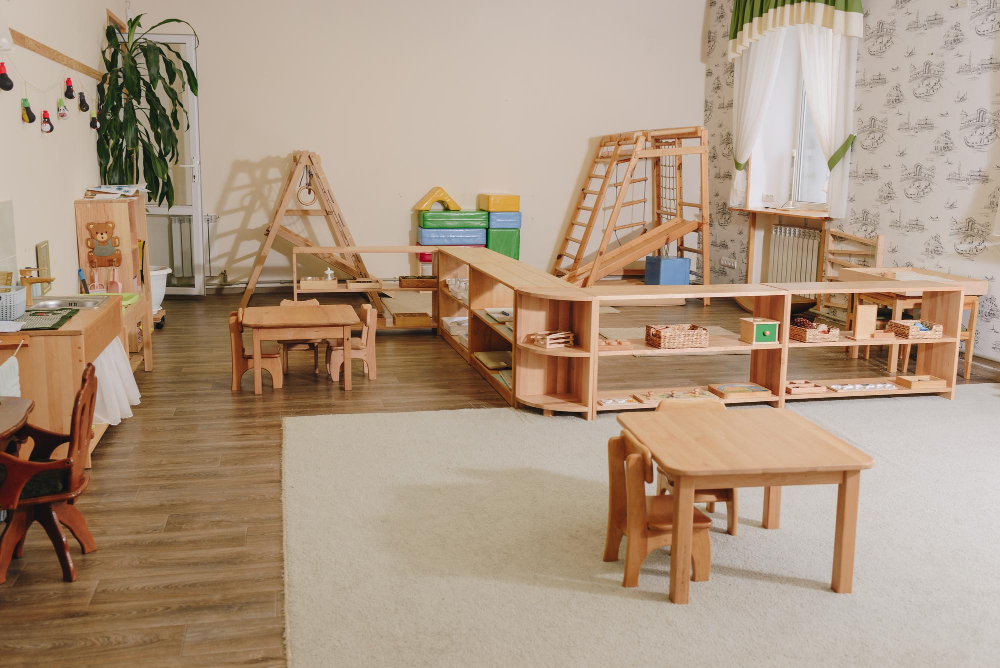
- Prepared Environment: Classrooms are designed with accessible, hands-on materials that cater to various #developmental stages, allowing children to explore and learn independently.
- Mixed-Age Groups: Children of different ages learn together, fostering peer learning, mentorship, and a sense of community.
- Traditional Preschool:
- Structured Environment: Classrooms are organized with designated areas for specific activities, and children often engage in the same tasks simultaneously.
- Same-Age Groups: Children are grouped by age, with activities tailored to the developmental norms of that specific group.
How do teaching methods differ between Montessori and traditional preschool?
- Montessori Education:
- Individualized Instruction: Teachers observe and guide each child based on their unique interests and developmental needs, providing personalized learning experiences.
- Hands-On Learning: Emphasizes experiential learning with tactile materials that facilitate concrete understanding of abstract concepts.
- Traditional Preschool:
What is the teacher's role in Montessori compared with traditional preschool?
- Montessori Education:
- Facilitator and Observer: Teachers act as guides, creating an environment conducive to exploration and stepping in to support when necessary, allowing children to take ownership of their learning.
- Traditional Preschool:
- Director and Instructor: Teachers lead activities, provide instructions, and manage the classroom dynamics, often directing the learning process.
Professional Development Resources
For #educators seeking to deepen their understanding of Montessori education or enhance their teaching practices, the following resources are available:
See our Online Childcare Courses guide for additional course options, formats, and comparisons to help you select the best professional development.
- Training Course: "Montessori Assistant Training Buy Now $250.00" from ChildCareEd offers foundational skills for supporting Montessori classrooms, including practical strategies for the prepared environment and supporting independence. Also consider Implementing the Montessori Curriculum Buy Now $32.00 for guidance on planning for mixed-age instruction and inclusive adaptation.
- Educational Article: "Understanding Montessori’s Approach to Child Development" on Montessori4Teachers offers valuable perspectives on implementing Montessori principles.
- Free Resource: ChildCareEd offers a variety of #free resources, including informative articles and activity ideas, to support #early-childhood-educators in various settings.
How can educators engage with the professional community to improve practice?
Staying connected with fellow educators and accessing diverse teaching resources can enhance classroom practices. ChildCareEd maintains an active presence on social media platforms, sharing tips, activities, and insights related to #early-childhood education.
- Instagram: Engage with creative educational content and ideas on ChildCareEd's Instagram profile.
- Pinterest: Explore a collection of activities, #crafts, and educational resources curated by ChildCareEd.
How should families and educators choose between Montessori and traditional preschool?
Deciding between Montessori and a traditional preschool depends on the child's needs and the family's priorities. Montessori emphasizes self-direction, hands-on materials, and a prepared environment that supports independence. Traditional preschools deliver teacher-led, group-paced instruction with a focus on shared routines and school-readiness skills. When choosing, prioritize programs that show consistent practice of their stated approach, clear communication with families, and staff who have relevant training. Use the visit checklist above, review available ChildCareEd courses, and follow up with questions about staff training, mixed-age practice, and how the program documents progress. If you are an educator, use the ChildCareEd courses and articles linked above to design a focused plan for observation, materials, and classroom routines.
How can I evaluate a Montessori or traditional classroom during a visit?
During a site visit, look for concrete, observable evidence that a program practices the approach it claims. For Montessori: check whether materials are accessible on low shelves, whether children choose activities for sustained periods, and whether adults present lessons as brief, individualized demonstrations. Look for mixed-age groupings, purposeful transitions, and unobtrusive adult scaffolding. For traditional preschool: observe the daily schedule, group circle times, and teacher-directed sequences that indicate whole-group pacing and shared routines.
Ask these specific questions of staff: How do you document individual progress? What role do adults take during independent work? Can you show a recent example of a child-driven learning sequence? Request to see samples of student work or assessment notes. Evidence that staff routinely record observations and use them to plan next steps suggests developmentally responsive practice; consider Mastering Observation Techniques in the Montessori Classroom Buy Now $16.00 for staff training in objective observation and documentation.
Practical markers to note during a walk-through: 1. Material organization and rotation — are materials complete, purposeful, and inviting? (See Understanding Montessori Materials.) 2. Child engagement — do children focus on tasks for meaningful spans, and do they care for materials? 3. Adult interaction — do adults primarily observe and only intervene when offering a lesson or protection? 4. Evidence of assessment — are there visible portfolios, observation notes, or learning plans? These indicators help you judge fidelity to philosophy rather than marketing language.
How can traditional preschools adopt Montessori practices without changing licensing or program type?
Traditional programs can integrate Montessori-informed practices while retaining their overall structure. Start by introducing one accessible strategy: prepare a small area with a limited set of tactile, self-correcting materials where children may work independently for short blocks of time. Train staff to offer brief, focused demonstrations and to step back during children’s independent work to observe. Implement consistent care routines that encourage practical life skills (pouring, dressing frames, simple food preparation) to build independence and concentration.
Use mixed-age pairings for specific activities (e.g., art, practical life) to foster peer mentoring without restructuring entire classrooms. Emphasize observation-based planning: collect brief notes after sessions, and base next activities on observed interests. ChildCareEd resources can support this work — see Preschool Curriculum Types for guidance on hybrid approaches and consider the course Implementing the Montessori Curriculum Buy Now $32.00 to adapt Montessori elements to mixed-age or inclusive settings.
Small, measurable steps—adding one prepared shelf, training staff in one observation method, or scheduling short, child-directed work periods—allow programs to trial Montessori practices and evaluate effects on engagement and classroom climate without regulatory change.
What are the key takeaways when choosing between Montessori and traditional preschool?
Prioritize observable practice over labels: verify that the day-to-day classroom routines reflect the program’s stated approach. Ask for examples of staff training, documentation, and how progress is shared with families. For Montessori fidelity, look for a prepared environment, mixed-age opportunities, and staff skilled in observation and brief lesson presentation. For traditional preschools, confirm consistent routines, clear learning objectives, and teacher-led scaffolding toward school-readiness goals. Use ChildCareEd courses and the linked articles above to prepare relevant questions and to plan professional development. If further verification is needed, request a sample learning plan or recent observation notes from staff.
What should educators and families do next?
Prioritize short, observable checks: schedule a classroom visit, ask to see staff observation notes and a sample learning plan, and confirm the program’s routine aligns with its stated approach. For programs considering adaptation, start with one measurable change (for example, a prepared shelf or a short independent work period), train staff in a single observation method, and document effects. Use targeted professional development and the ChildCareEd resources linked above to plan, apply, observe, and iterate—this gives both families and educators practical steps to test fit and fidelity.
