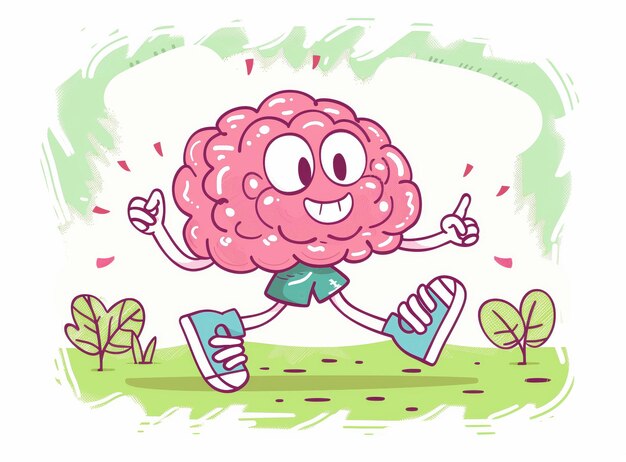
 If you’ve ever marveled at how peacefully focused a child can be while pouring water, sorting shells, or tracing sandpaper letters, you’ve witnessed something incredible — the brain in deep, joyful learning mode. Montessori #educators have known for over a century what modern neuroscience now confirms: the way children learn best aligns beautifully with how the brain #develops and functions.
Maria Montessori was far ahead of her time, and today’s brain research continues to validate her insights. Let’s explore what neuroscience tells us about why Montessori works — and how we can use this knowledge to make learning even more meaningful (and fun!) for children.
🧩 The Absorbent Mind: The Brain’s Natural Superpower
Montessori described the young child’s brain as the “absorbent mind” — a period when children unconsciously and effortlessly take in information from their environment. Between birth and about age six, the brain is forming more neural connections than at almost any other time in life. Children are literally wired for exploration, imitation, and #sensory discovery.
To deepen your understanding of this idea, you might enjoy reading this article:
👉 The Absorbent Mind in Montessori Education.
It’s a wonderful reminder that every practical life task, every piece of material, and every quiet moment of concentration has a powerful neurological purpose.
🔬 Montessori Methods Through the Lens of Neuroscience
Modern research on brain #development supports many of Montessori’s core principles. Here are some ways neuroscience aligns with Montessori philosophy:
-
Hands-on learning strengthens memory.
When children manipulate materials — like the sandpaper letters, counting beads, or blocks — they activate multiple areas of the brain simultaneously: sensory, motor, and cognitive. This multi-sensory #engagement helps build stronger connections, making the learning more durable and meaningful. -
Choice and autonomy fuel motivation.
Giving children #freedom of choice in their work engages motivation networks, releasing neurotransmitters (like dopamine) that support attention, reward, and memory consolidation. When children choose their activities, they become more engaged, more persistent, and more likely to internalize what they learn. -
Repetition reinforces neural pathways.
Montessori environments allow children to repeat meaningful tasks. Repetition strengthens synapses, making skills more automatic. That means the more they repeat pouring, sorting, or polishing, the smoother and more refined those skills become, freeing up cognitive load for higher level thinking. -
Movement enhances cognitive function.
Neuroscience shows that physical movement increases blood flow and oxygen to the the brain, boosting attention, processing #speed, and executive functioning. Montessori #classrooms where children move #freely and purposefully align beautifully with that research. -
Order and structure support executive function.
A well-prepared environment reduces cognitive overload. Clear structure, consistent routines, organized materials reduce #mental distractions and help children plan, self-regulate, and focus better.
In short: Montessori learning isn’t just nice — it is brain-friendly by design.
🔎 Integrating Early Science in Montessori Classrooms
Science in Montessori is not just about facts, but about curiosity and discovery. Young children are natural scientists — observing, asking questions, experimenting, and drawing conclusions. When we plan science experiences that respect their #developmental stage, we help build scientific thinking, memory, and reasoning skills.
If you want to dive deeper into strategies for integrating science in #early-childhood settings, check out this course:
👉 Building Early Science Foundations  Buy Now $16.00.
It offers practical, brain-based strategies to foster curiosity, observational skills, and inquiry in young children.
🎃 October Tangible Activity: Pumpkin Seed Exploration & Sink or Float Lab
This hands-on science + sensory activity is perfect for October, combining sensory investigation, scientific thinking, and seasonal fun.
🧺 Materials:
-
Small pumpkins (or gourds)
-
Tray or water bin
-
Pumpkin seeds (cleaned and dried)
-
Measuring spoons or scoops
-
Clear container of water
-
A selection of small natural or classroom objects (rocks, leaves, small toys, etc.)
-
Prediction cards or visual cue cards: “sink / float”
-
Chart paper for recording results
🔎 Activity Steps:
-
Predict & scoop seeds
Have children scoop out pumpkin seeds using spoons or scoops. Let them count seeds, estimate how many seeds are inside pumpkin, weigh seeds, or sort by size/texture. -
Sink or Float test
Use a water bin. Ask children to predict whether each seed or small object will sink or float. Let them test by placing items in water and observing what happens. -
Record & compare
Use cue cards: one for “sink” and one for “float.” Children place objects in the appropriate card group after testing. Chart results and compare predictions vs actual. -
Reflect & extend
Ask questions: Why did that object float? Why did that sink? Extend by adding salt or other materials to water to see how buoyancy changes.
This activity helps children explore scientific concepts (density, buoyancy), develop fine motor skills, practice counting and sorting, and engage in sensory discovery.
You can use a ready lesson plan for similar water + sensory activities:
👉 Sample Science & Sensory Lesson Plan: “Sink or Float Discovery”.
🌱 Teacher Tips: Use Neuroscience to Strengthen the Experience
-
Encourage children to make predictions — this stimulates the brain’s reasoning and executive function.
-
Let children test their own hypotheses — creating strong neural pathways for cause/effect reasoning.
-
With repetition, children refine their skills and deepen their understanding.
📘 Further Professional Growth
To enrich your teaching practice even more, here are resources I recommend:
-
Course: Building Early Science Foundations
Buy Now $16.00 – to expand your science curriculum ideas in #developmentally-appropriate ways. -
Article: The Absorbent Mind in Montessori Education – helps deepen your understanding of how children absorb from their environment.
💬 Final Thoughts
Neuroscience gives us the behind-the-scenes explanation for Montessori: children learn best when they’re active, self-directed, immersed in sensory experiences, and allowed to explore at their own pace.
This October, try the pumpkin seed + sink or float activity to let children become little scientists. As you support their wonder and curiosity, you’re not just helping them explore — you’re shaping their brains in meaningful ways.
Don’t forget to follow ChildCareEd.com on social media for updates, tips, job postings, and community support on this rewarding journey in #early-childhood education
- The Montessori Classroom: Theory to Practice
- Implementing the Montessori Curriculum
- Montessori Foundations
- Montessori Assistant Training
- Sensitive Periods in Montessori: Guiding Natural Learning
- Montessori Cultural Activities: Exploring the World Through Play and Learning
- Inclusive Montessori: Supporting Diverse Learners in the Classroom
- The Prepared Environment: Montessori Class Design
- Raising Peaceful Learners: The Montessori Advantage
- Montessori Education and Brain Development
- Is Montessori Really for All?
- The Purpose of Practical Life in Montessori Education
- Montessori for Adolescents: The Erdkinder Program
- Motivation’s vital role in how children engage with learning
- Focus on the Whole Child: The Montessori Approach to Holistic Development
- Teaching the Montessori Way: A Guide for Educators
- Elementary Montessori: Fostering Curiosity & Responsibility
