What is a Montessori “prepared environment,” and why does it #matter so much?
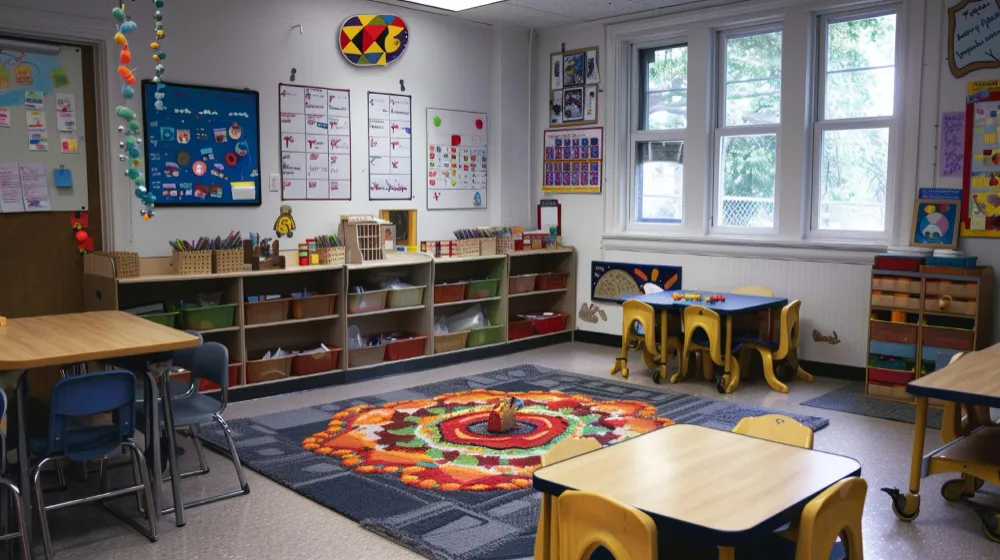
In Montessori, the #classroom is set up on purpose so children can find what they need, use it carefully, and put it back when they are done. This is called the prepared environment.
When the room is prepared well, it helps children:
- know where to go
- Choose work without arguing
- Stay focused longer
- clean up with less help
That is why layout is not “extra.” It is a big part of classroom peace.
If you want clear guidance on setting up a Montessori classroom, these Montessori4Teachers courses are directly related and listed on https://www.montessori4 #teachers.com/onlinecourses.html:

How should Montessori shelves be set up in a busy classroom?
Think of shelves as a “map” that helps children know what to do. When shelves are messy, children get stuck. When shelves are clear, children move smoothly.
Try these shelf basics:
- Keep shelves child-height so children can reach materials without asking.
- Leave space between works so it does not look crowded.
- Put materials in the same spot every day so children can #learn the order.
- Group by area (Practical Life, Sensorial, Language, Math, Culture).
- Go from simple to complex (easier work first, harder work later).
Busy-classroom tip: pick your top 10 most-used works and make sure those shelf spots are extra clear and easy to reach. If children can grab the “popular” works without bumping into each other, your whole room feels calmer.
What should NOT go on Montessori shelves (to prevent chaos)?
A busy classroom does not need more stuff. It needs better choices.
Avoid:
- broken or incomplete materials
- bins stuffed with mixed pieces
- too many choices in one area
- “random” #teacher-supplies on children’s shelves
Instead, try a “less is more” rule:
- Put out fewer works at one time
- Rotate materials weekly or every two weeks
- Keep extras in a labeled teacher cabinet
This helps children focus and helps you clean faster at the end of the day.
Why do Montessori #classrooms use rugs, and where should they go?
Rugs are not just cute. Rugs are workspaces. They show a clear boundary: “This is my work area.”
Rug basics that help busy rooms:
- Store rugs in one consistent spot (a basket, bin, or vertical rack).
- Choose rugs that are easy to roll and easy to clean.
- Have enough rugs so children are not waiting or arguing.
Where rugs should go:
- In open floor space where children can walk around them
- Away from doorways and “traffic lanes”
- Not too close to shelves (so children can still access materials)
What rug rules should you teach (so children don’t trip, grab, or interrupt)?
Rugs work best when you teach “Grace and Courtesy” style lessons on rug use.
Simple rug rules to practice:
- Carry rug with two hands
- Roll it up when you’re done
- Walk around rugs (not on them)
- Look with your eyes, not your hands
- Ask before joining someone’s rug
Busy-classroom tip: teach rug lessons in tiny steps over a few days. For #example:
- How to carry a rug
- How to unroll it
- How to walk around rugs
- How to roll it up and return it
Children learn faster when each lesson is short and repeated. 
How do trays help children (and teachers) stay organized?
A Montessori tray is like a “work kit.” Everything the child needs is together. This prevents pieces from being lost and keeps the shelf looking calm.
Tray basics:
- Put one main activity per tray
- Include only the exact items needed
- Make it easy to carry (not too heavy, not too wide)
- Keep it neat and simple (too many items can confuse children)
Great places to use trays in busy classrooms:
- Practical Life (spooning, pouring, tweezing)
- Art (one simple art choice at a time)
- Language (matching cards, object-to-picture)
- Math (counting work with clear steps)
When trays are consistent, children can start work faster—and you spend less time hunting for missing parts.
How can you set up “traffic flow” so children move without bumping or fighting?
Traffic flow means how children walk through the room. In Montessori, children should be able to move #freely, but the room still needs a clear path.
Try these quick fixes:
- Make one clear walking path around the classroom.
- Keep high-interest shelves away from tight corners.
- Put table work in one zone and rug work in another.
- Use fewer, smaller tables if the room feels crowded.
- Keep “teacher-only” supplies out of children’s pathways.
A helpful (non-Montessori-specific) ChildCareEd article that talks about how layout and routines reduce behavior problems is:
Classroom-tested strategies to help #preschool teachers manage their classrooms
What is the fastest daily reset routine for shelves, rugs, and trays?
You do not need a perfect classroom. You need a repeatable reset.
Try a 10–15 minute daily reset:
- 3 minutes: rugs rolled and returned
- 5 minutes: trays checked (all pieces there, placed straight)
- 3 minutes: shelves faced forward (quick “shelf sweep”)
- 2 minutes: floors cleared, chairs pushed in
Busy-classroom tip: give children simple helper jobs, like:
- “Rug Checker”
- “Tray Checker”
- “Shelf Straightener”
For a ready-to-use tool, this free Montessori4Teachers resource is listed on https://www.montessori4teachers.com/freeresources-1.html and works well for busy classrooms: End-of-Day Classroom Closing Checklist Buy Now $0.00
How do you keep the Montessori layout realistic when you’re short on time?
If you are overwhelmed, start small. Pick one area and improve it first.
A simple “start today” plan:
- Day 1: clean one shelf (remove extra items, space out works)
- Day 2: fix rug storage (one clear place, teach rug routine)
- Day 3: improve 3 trays (one work per tray, missing pieces replaced)
- Day 4: Create one clear walking path
- Day 5: add the end-of-day reset checklist
Small changes add up fast—and children notice.
Want more #classroom-setup ideas you can save and use later?
Follow ChildCareEd on Pinterest for #early-childhood tips, room ideas, and activity inspiration: https://www.pinterest.com/childcareed/
Save a few layout pins this week and share them with your team so you can try one change at a time.
