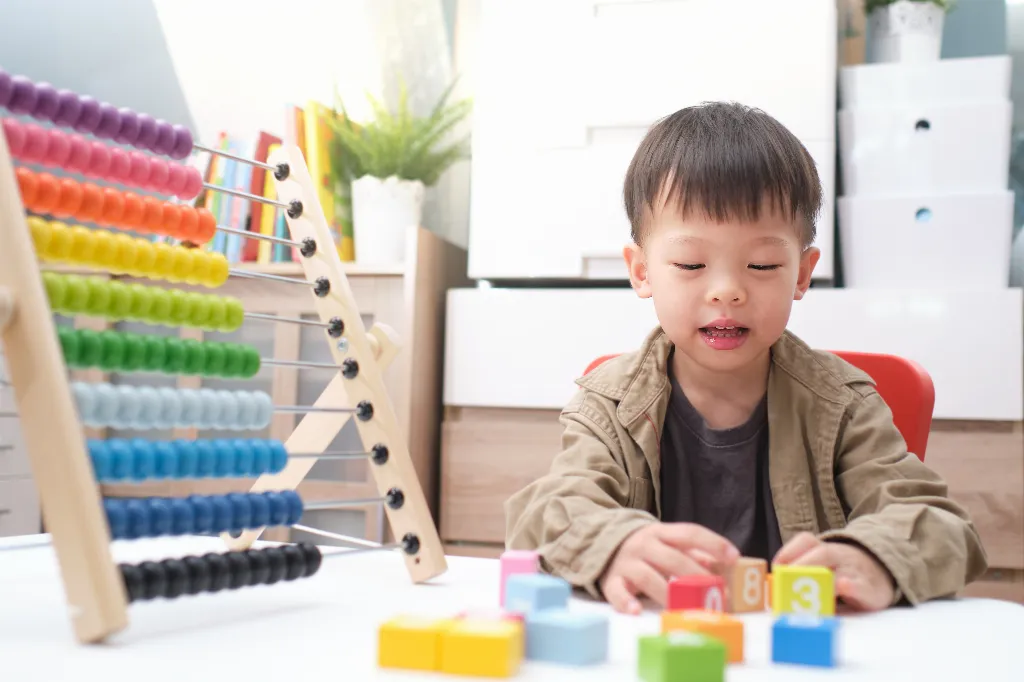
 If you’ve ever watched a #toddler insist that their socks must be folded a certain way—or that the blue cup is the only acceptable cup—you’ve witnessed a Montessori “sensitive period” in full swing. These are magical windows of time when children are naturally drawn to master specific skills with laser-like focus and enthusiasm.
In Montessori education, these moments aren’t brushed off as quirks—they’re celebrated as golden opportunities for learning.
That’s exactly what the course Sensitive Periods in Montessori: Guiding Natural Learning  Buy Now $16.00 explores. Designed for #early-childhood- #educators and caregivers, this training dives deep into how to spot, support, and celebrate these powerful #developmental phases. By understanding when children are most receptive to certain skills, #teachers can tailor the learning environment to help each child thrive—without forcing, rushing, or overwhelming them.
🌸 What Exactly Are Sensitive Periods?
Maria Montessori discovered that children move through specific stages where their brains are wired to absorb certain types of knowledge more easily—like little sponges with purpose.
These periods might include:
-
Language development (why #toddlers talk non-stop once they start!)
-
Movement and coordination (cue: endless jumping and dancing)
-
Order (why your 3-year-old might lose it if you move the toy basket)
-
Refinement of the senses (touching everything in sight is actually learning!)
Each sensitive period acts as nature’s way of saying, “Hey, the brain is ready for this now!”
🏗️ The Sensitive Period for Order: Why Tiny Humans Love Structure
The Understanding the Sensitive Period for Order article explains that this period often starts around 6 months and peaks around age 3. During this time, children crave predictability. They feel #safe and capable when their world makes sense—when toys are in the same spot, daily routines are steady, and transitions are gentle.
If you’ve ever switched up the bedtime routine and triggered a full-blown toddler meltdown, you’ve likely met this sensitive period firsthand. (No, your child isn’t trying to test your patience—they’re just running on an inner need for order that’s as strong as gravity!)
Montessori #classrooms embrace this beautifully by offering a prepared environment—a space where everything has a purpose and a place. Children quickly learn independence by returning materials to shelves, following gentle routines, and developing respect for their surroundings. If you re a caregiver looking for age-by-age, practical ideas to create a similarly supportive home environment, see Montessori Magic at Home: Tips for Every Age.
🎨 Discovering Sensitive Periods Through Play
Of course, Montessori doesn’t mean serious faces and silent work all day long. Learning happens best through joyful exploration! The resource Discovering Sensitive Periods Through Play Buy Now $0.00 celebrates #play as a powerful bridge between curiosity and discovery.
When children play #freely—with sand, #puzzles, art, or #pretend cooking—they’re not “just playing.” They’re fine-tuning coordination, experimenting with cause and effect, and building neural pathways that prepare them for more complex learning later.
Montessori educators are trained to observe closely during play—to recognize subtle clues that a child is entering a sensitive period. That’s when the magic happens: instead of interrupting, they guide gently, offering materials or activities that feed that exact curiosity.
🧩 The Role of the Adult: Less Director, More Detective
In Montessori philosophy, adults are observers and guides, not drill sergeants. During sensitive periods, children don’t need us to teach them in the traditional sense—they need us to notice what excites them, then create opportunities to explore it more deeply.
That might mean providing extra pouring exercises during a fine motor period, or extra story time when a child is #language-obsessed. The goal is to match the environment to the child’s developmental drive—not the other way around.
The Sensitive Periods in Montessori: Guiding Natural Learning course helps educators do exactly this, walking through Montessori’s Planes of Development and showing how each phase connects to specific sensitive periods. With that knowledge, caregivers can #craft experiences that feel effortless, aligned, and joyful for the child.
😂 Funny Break: When “Sensitive Period” Meets Real Life
Let’s be honest—sometimes these sensitive periods feel less like a magical educational moment and more like living with a very tiny, very opinionated roommate.
For example:
-
You rearrange their shelf? Instant chaos.
-
The red shirt is in the wash? Cue the tears.
-
You say “let’s clean up!” and they reorganize the blocks by color, size, and emotional attachment.
But here’s the silver lining: these moments of toddler “drama” are actually signs of deep learning in progress. When a child insists on pouring their own juice (and spills it everywhere), that’s independence unfolding. When they line up their toy animals just so, they’re developing pattern recognition and spatial awareness.
So yes, it can be messy—but it’s meaningful. And someday, you’ll miss those moments when their biggest problem was whether the blue cup matched the blue spoon.
🌟 Why This Course Matters for Educators
By enrolling in Sensitive Periods in Montessori: Guiding Natural Learning Buy Now $16.00, educators gain the tools to:
-
Identify each child’s sensitive periods
-
Adjust the environment to support natural development
-
Foster independence, confidence, and curiosity
-
Build smoother classroom interactions
-
Earn 0.2 CEUs as part of professional growth
It’s not just theory—it’s a practical guide to creating harmony between how children want to learn and how we can help them learn best.
💫 Final Thoughts: Respecting the Rhythm of Growth
Sensitive periods remind us that learning doesn’t always happen on our schedule. Children unfold in their own time, guided by internal motivation and natural curiosity. Our job is to notice, support, and celebrate the journey.
Whether you’re a Montessori teacher, a #parent, or someone simply fascinated by child development, understanding sensitive periods transforms how you see learning itself—it’s not about teaching more, but trusting more.
So the next time a child insists on the same bedtime book again, take a deep breath, smile, and remember: they’re right on time.
To stay informed on the latest trends, gain #leadership insights, and find daily inspiration for your center, please follow ChildCareEd.com on Instagram!
#early-childhood-educators
- Understanding Montessori’s Approach to Child Development
- The Absorbent Mind in Montessori Education
- Sensitive Periods in Child Development
- Understanding Sensitive Periods in Montessori Education
- Understanding Montessori’s Vision of Childhood
- A Montessori Day: Calm, Curious, Connected
- How Does Montessori Support Children During Potty Training?
- 🎨 Why Fewer Toys Can Mean More Imagination?
