In today’s rapidly changing world, academic skills alone are no longer enough. Social and emotional intelligence—particularly empathy and conflict resolution—are essential for building compassionate, peaceful communities. Fortunately, these qualities are not just ideals in Montessori education; they are lived, modeled, and practiced every day.
Montessori offers a holistic approach that #nurtures both the intellect and the heart. By embedding #empathy and peaceful conflict resolution into the rhythm of daily life, Montessori #educators prepare children not just for tests—but for life. To support classroom practice, consider ChildCareEd professional courses such as Raising Peaceful Learners: The Montessori Advantage  Buy Now $16.00 and You're Not My Friend Anymore: Learning Conflict Resolution Buy Now $16.00, which offer concrete strategies and tools for implementing peace education and teaching conflict skills in early childhood settings.
Why do empathy and conflict resolution matter?
Empathy is the ability to understand and share the feelings of another. Conflict resolution involves navigating disagreements with respect, communication, and a desire for harmony. These are not just “soft skills”—they are the building blocks of #healthy relationships, effective leadership, and global citizenship.
Children who are taught these skills #early are more likely to:
-
Communicate effectively
-
Self-regulate emotions
-
Build meaningful relationships
-
Navigate peer conflict constructively
And the Montessori environment is uniquely designed to cultivate these qualities naturally.
How does the Montessori framework support social learning?
Montessori #classrooms are built on the pillars of respect, responsibility, and collaboration, which creates fertile ground for emotional #growth. Here's how Montessori fosters empathy and peaceful conflict resolution:
Related ChildCareEd guidance: Development of Social and Emotional Skills in Montessori Education, The Transformative Power of Montessori, Montessori Social Skills: Grace and Courtesy Lessons, Grace and Courtesy Activities for Montessori Classrooms, Focus on the Whole Child: The Montessori Approach, and How Can We Teach the Forgotten Skill of Being a Good Friend?.
How do mixed-age classrooms promote peer learning?
Children learn empathy by interacting with peers of various ages. Older children model kindness, patience, and leadership. Younger children look up to them and learn cooperative behaviors organically.
How do grace and courtesy lessons teach social skills?
From a young age, Montessori children are explicitly taught how to greet others, offer help, #express disagreement respectfully, and handle social situations with care. These lessons lay the foundation for emotionally intelligent behavior. Teaching basic sign language and other nonverbal communication strategies can further support inclusive interactions and help nonverbal or multilingual children participate fully.Peace Tables and Conflict Resolution Tools
Many Montessori classrooms feature a peace table—a dedicated space for children to resolve conflicts independently. With tools like a peace rose or talking stick, children are guided to express their feelings, listen actively, and seek resolution without adult intervention.
Prepared Environment for Emotional Safety
Montessori educators prepare not only the physical space but also the emotional climate of the classroom. This includes modeling emotional regulation, offering calm guidance during conflicts, and validating children's emotions without judgment.
Freedom with Responsibility
Children make choices throughout the day, but they also learn that choices have social consequences. This balance encourages empathy by making children aware of how their actions affect others.
How can I implement peace education in my Montessori classroom?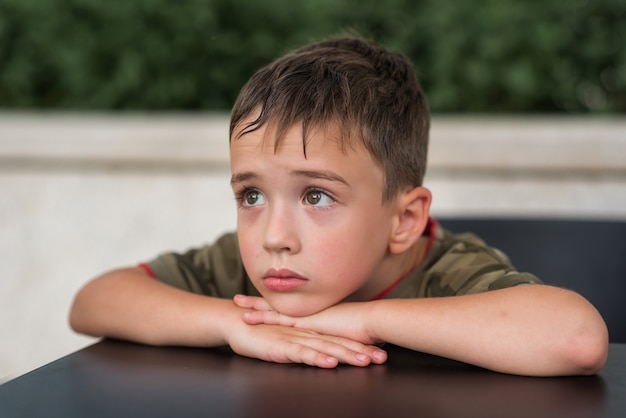
Implementing peace education requires more than a single lesson; it is a programmatic commitment embedded in schedule, language, and classroom rituals. Start by establishing simple, predictable social routines: morning greetings, a daily circle where children name feelings, and a visible 'peace area' where students can pause when they are upset. Use explicit, short lessons (5–10 minutes) to teach specific skills: how to use a talking piece, how to label and validate emotions, and stepwise conflict-resolution language such as "I feel X when you Y; I need Z." Model the language consistently—teachers narrate their choices, name emotions aloud, and demonstrate restorative phrases after incidents.
Next, scaffold children's practice. Role-play short scenarios with puppets or peer pairs, then support real conflicts with a structured protocol: 1) calm down time; 2) each child speaks uninterrupted using the sentence frame; 3) adults or peers offer a repeating summary; 4) jointly decide on reparative actions. Document the child's own solution and revisit it later to reflect on the outcome. Finally, engage families—share the same language and short home practices so children receive consistent messages across settings. When peace education is systematic, it moves from an occasional 'fix' to a predictable, teachable process that children internalize over time.
What age-appropriate activities teach empathy and conflict resolution?
Choose activities that match children's social-cognitive abilities and provide repeated, scaffolded practice. For toddlers and young preschoolers, use story-based empathy exercises: read a short book, pause to ask how a character feels, and invite children to act out a calming strategy. Use simple matching games that require noticing facial expressions or labeling emotions. For older preschool and early elementary children, implement structured peer coaching: the older child practices helping a younger peer with a task and then reflects aloud about how the peer might be feeling. Use collaborative tasks (shared art, cooperative building) that require turn-taking and negotiation, and debrief the social steps afterward.
Practical classroom tools include a talking stick or 'peace rose' to ensure turn-taking, emotion charts for visual emotion literacy, and short reflective forms (picture + sentence) children complete after a conflict to record what happened and what they will do differently. Each activity should be short, concrete, and repeated; repetition plus adult scaffolding is what moves social skills from supported to independent use.
Courses to Support You on This Journey
At Montessori4Teachers.com, we understand that nurturing social-emotional learning takes intention and training. Our professional #development courses are designed to equip you with the tools and techniques to foster kindness, empathy, and conflict resolution in your classroom.
Explore these recommended courses:
-
🌿 Teaching Peace: Empathy and Conflict Resolution in Montessori Classrooms
Learn how to implement peace education through real-life scenarios, rituals like the peace table, and proactive community-building strategies.
👉 Enroll now -
💬 Grace and Courtesy: Cultivating Respectful Communication
Dive into the art of modeling and teaching respectful dialogue, body #language, tone, and listening skills that are age-appropriate and #culturally-responsive.
👉 Start learning -
🧠 Emotional Intelligence in Early Childhood
Understand the stages of emotional development and how to support self-awareness and empathy at each stage.
👉 View course Buy Now $16.00
These self-paced courses are filled with practical tools, downloadable materials, and reflection prompts to deepen your practice as a peace-focused educator.
How can classroom practice scale toward a more peaceful world?
When we teach children to understand one another, to speak from the heart, and to resolve differences peacefully, we lay the foundation for a more compassionate and connected world. Montessori education doesn't treat these as side lessons—they are integrated into the very fabric of the classroom.
Let’s empower the next generation not only with knowledge, but with empathy.
How should educators act on these takeaways?
Montessori classrooms support empathy and conflict resolution through mixed-age groupings, explicit grace and courtesy lessons, and a prepared emotional climate that encourages responsible freedom. Action steps: 1) Model emotional language and use short daily rituals (greetings, emotion naming, peace area check-ins); 2) Teach and rehearse simple conflict protocols (calm-down, uninterrupted sharing using sentence frames, joint reparative actions) and document outcomes; 3) Partner with families so language and expectations are consistent across home and school. For professional development, consider courses such as Raising Peaceful Learners Buy Now $16.00, You're Not My Friend Anymore Buy Now $16.00, and Emotional Intelligence in Early Childhood to build practical classroom routines and reflection practices.
- Development of Social and Emotional Skills in Montessori Education
- Long-Term Benefits for Students: Montessori Education
- Teaching Empathy and Conflict Resolution the Montessori Way
- Why Is Montessori Education Effective for Social-Emotional Growth and Collaboration?
- How to Support Sibling Relationships the Montessori Way
