In Montessori education, hands-on materials are essential for guiding children toward independent learning and exploration. One of the most effective tools for #language- #development is the Moveable Alphabet. This material allows children to build words, experiment with sounds, and develop #early-literacy skills before they are physically able to write.
For educators who want practice-based training that explains how to set up and use Montessori materials, explore ChildCareEd courses such as Montessori Made Simple Buy Now $35.00 and Montessori Foundations  Buy Now $10.00. These courses review the prepared environment and practical ways to integrate materials like the Moveable Alphabet into daily routines, including adaptations for mixed-age groups and differentiation strategies. Because deep engagement with materials often depends on protected, focused time, consider how you schedule and preserve uninterrupted work periods in the classroom; our article Understanding Uninterrupted Work Periods explains their significance and offers practical strategies for supporting sustained exploration.
The Moveable Alphabet is a powerful resource that bridges the gap between spoken language and written #expression. In this article, we will explore what the Moveable Alphabet is, how it is used, and the benefits it offers to young learners.
What is the Montessori Moveable Alphabet?
The Moveable Alphabet consists of a set of wooden or plastic letters, usually housed in a compartmentalized box. Each letter is lowercase, and the vowels are typically colored differently from the consonants (often red for vowels and blue for consonants).
This material is designed to help children:
- Recognize letter shapes and sounds
- Understand word formation
- Develop phonemic awareness (the ability to hear and manipulate sounds in words)
- Gain confidence in spelling before mastering handwriting
By physically manipulating the letters, children can create words and sentences without the challenge of writing, making the learning process engaging and accessible.
How is the Moveable Alphabet used in Montessori classrooms?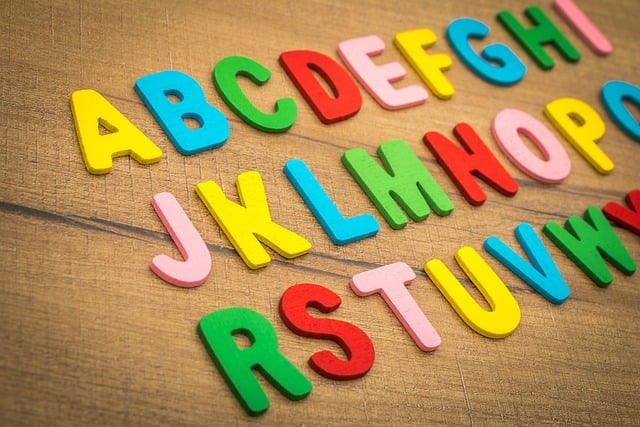
How does the Moveable Alphabet strengthen phonemic awareness?
One of the primary goals of the Moveable Alphabet is to help children recognize that words are made up of individual sounds. This skill, known as phonemic awareness, is a crucial step in learning to read and write.
By saying a word aloud and selecting letters to represent each sound, children begin to understand the relationship between spoken and written language.
How does the Moveable Alphabet support early spelling and word formation?
Children naturally want to express themselves, and the Moveable Alphabet allows them to form words before they can write by hand. Using this material, they can:
- Spell simple words by sounding them out (e.g., "cat" → c-a-t)
- Experiment with different letter combinations
- Build words related to their interests, making learning more meaningful
How can the Moveable Alphabet support vocabulary development?
When children use the Moveable Alphabet, they expand their vocabulary by experimenting with new words. Teachers and #parents can encourage vocabulary #growth by:
- Providing picture cards for word inspiration
- Asking children to spell words related to themes (e.g., animals, food, family)
- Encouraging the creation of short sentences
How does the Moveable Alphabet bridge spoken and written language?
Before writing fluently, children must develop fine motor control. The Moveable Alphabet enables them to express ideas in written form without the pressure of handwriting. This boosts their confidence and motivation to engage with language. Complementary Practical Life activities build the fine motor control, independence, and sustained attention that prepare children to use materials such as the Moveable Alphabet; see Unlocking the Power of Practical Life: A Montessori Foundation for practical examples.
How does the Moveable Alphabet prepare children for reading?
As children become comfortable forming words with the Moveable Alphabet, they naturally begin to decode written words when reading. This strengthens their ability to:
- Recognize letter patterns
- Sound out new words
- Understand sentence structure
By using the Moveable Alphabet alongside phonetic reading materials, children develop essential reading skills in a #stress- #free and interactive way.
How should teachers present the Moveable Alphabet in a Montessori classroom?
How do you introduce the Moveable Alphabet to a child?
- Invite the child to explore the Moveable Alphabet.
- Show them how to carefully handle and organize the letters.
- Review the sounds of the letters before starting word-building activities.
How do you encourage word formation with the Moveable Alphabet?
- Say a simple word aloud (e.g., "dog").
- Ask the child to identify the sounds they hear in the word.
- Guide them in selecting the corresponding letters (d-o-g).
- Repeat with different words, increasing in complexity as the child gains confidence.
What activities expand a child's use of the Moveable Alphabet?
Once the child is comfortable forming words, introduce:
- CVC words (consonant-vowel-consonant) like "hat" and " #sun"
- Blends and digraphs (e.g., "sh", "ch", "tr")
- Short sentences using the Moveable Alphabet ("I see a cat")
- Storytelling where the child creates their own phrases
How do you encourage independent exploration with the Moveable Alphabet?
- Allow children to build words based on their interests.
- Provide picture cards or objects to inspire new words.
- Celebrate their progress and creativity!
What are the long-term benefits of using the Moveable Alphabet?
The Moveable Alphabet #plays a crucial role in early literacy development, offering many long-term benefits:
- Builds confidence in spelling and writing: Children gain the ability to form words independently before mastering handwriting.
- Enhances phonemic awareness: Hands-on interaction with letters strengthens their ability to recognize and manipulate sounds.
- Encourages creativity: Children explore language #freely, creating their own words and stories.
- Supports reading development: Understanding letter sounds and word formation makes reading easier and more enjoyable.
By incorporating the Moveable Alphabet into daily learning, children develop a strong foundation for future literacy skills.
Teachers and program leaders can use brief, observation-based assessments to document progress: note a child's ability to segment spoken words into constituent sounds, to select letters independently, and to generalize letter–sound correspondences to new words. Record samples of the child's word-building across several weeks to chart growth and plan targeted supports. Differentiate by offering scaffolded prompts (for example, picture cues, onset-rime modeling, or a reduced-letter set) for learners who need extra support and by introducing blends or multisyllabic words for children who show advanced phonemic manipulation. Integrate Moveable Alphabet activities into thematic units and shared reading so that word-building is meaningful and repeated across contexts. Finally, share concise observational notes and paired student work with families to align home and classroom language support and to sustain learning beyond the school day.
Where can educators find more resources about Montessori language materials?
For #educators and parents interested in learning more about Montessori language materials and methods, explore the following: If you are deciding whether the Montessori approach aligns with your teaching philosophy or program, read Montessori & You: A Perfect Match? for guidance and resources.
- Training Opportunity: Implementing the Montessori Curriculum Buy Now $32.00 – A ChildCareEd course that explains how to sequence Montessori language materials and adapt lessons for diverse learners.
- Article: The Transformative Power of Montessori – An overview of how Montessori education fosters independence, a love of learning, and social skills in early childhood.
- Article: Creating Engaging Activities to Promote Literacy Skills – Practical, play-based activities that pair well with Moveable Alphabet work.
- Article: How can child care providers use the science of reading to boost early literacy? – Evidence-informed strategies for phonics and phonemic awareness that complement Moveable Alphabet practice.
- Article: Can we build early literacy skills through play in high-quality child care? – Discusses play-based approaches that support language development.
- Article: Understanding Montessori Materials – A guide to the purpose and sequencing of Montessori language materials, including the Moveable Alphabet.
- Article: What simple early literacy activities really help children learn? – Short classroom activities to pair with letter work and phonemic practice.
- Article: How can preschool programs build early literacy every day? – Practical daily routines and strategies to integrate early literacy in preschool settings.
For more Montessori insights, follow us on Facebook.
What is the bottom line about the Moveable Alphabet?
The Montessori Moveable Alphabet is an invaluable tool for early literacy development. By allowing children to experiment with letter sounds and word formation in a hands-on way, this material fosters confidence, curiosity, and a love for language.
Through repeated use, children strengthen their spelling skills, expand their vocabulary, and develop the foundational knowledge needed for reading and writing. Whether used in a classroom or at #home, the Moveable Alphabet continues to inspire young learners on their path to literacy.
