Montessori education Buy Now $35.00 is more than just a teaching method—it’s a philosophy that nurtures independence, curiosity, and a love for learning. If you're an educator looking to embrace Montessori principles in your classroom, it’s essential to understand the core values and practical techniques that set this approach apart. For context on how these principles developed and why they continue to influence classrooms today, see the history of Montessori education. Consider ChildCareEd course options such as Teach the Montessori Way: A Practical Guide and Montessori Made Simple Buy Now $35.00 to deepen your practice.
What Does It Mean to Teach the Montessori Way?
Montessori teaching is centered around the idea that children learn best through hands-on exploration and self-directed activities. Here are the key principles that define this approach:
How does respect for the child look in practice?
Montessori educators see each child as an individual with unique needs and interests. By respecting their natural development, teachers create a learning environment that fosters confidence and independence.
What is a prepared environment and why does it matter?
The classroom is carefully designed to encourage exploration, independence, and order. Materials are accessible, aesthetically pleasing, and arranged to promote self-directed learning. For practical guidance on preparing Montessori environments and the key design principles, see What Is Montessori Learning? from WGU.
Why is hands-on learning central to Montessori practice?
Montessori classrooms Buy Now $35.00prioritize concrete, tactile experiences. Instead of memorization, children engage in hands-on activities that allow them to deeply understand concepts.
What does 'freedom within limits' look like in the classroom?
Children have the freedom to choose their activities, but within a structured environment that provides clear expectations and gentle guidance from the teacher.
What is the teacher's role in a Montessori classroom?
Montessori educators act as guides rather than traditional instructors. They observe, support, and f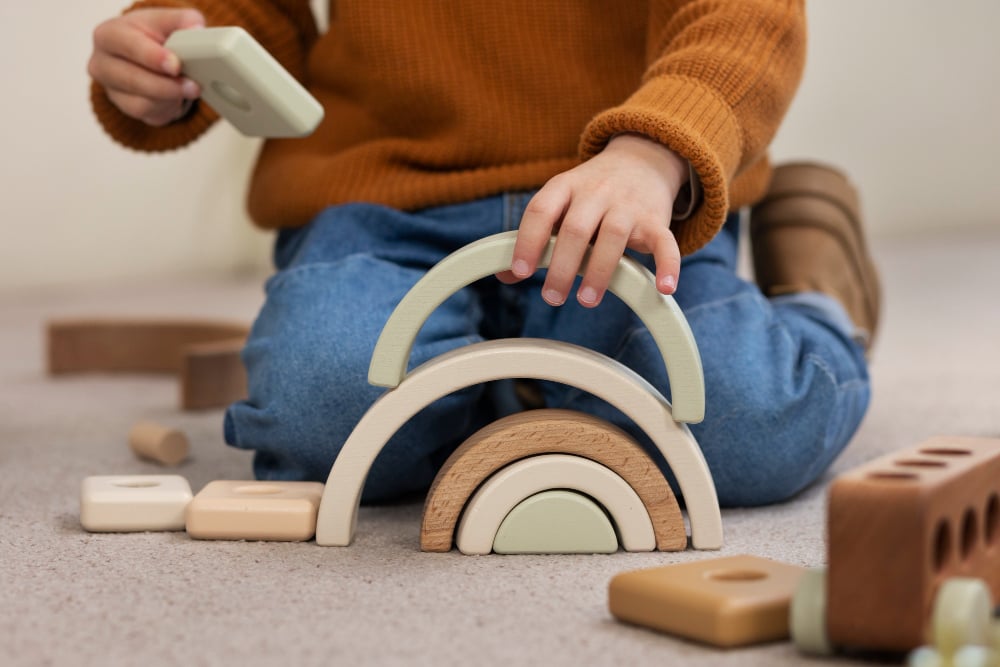 acilitate learning rather than dictate it. The teacher’s role is to connect students with the right materials and step back to allow independent exploration. For practical classroom strategies on observation, presentation, and the guide role, see ChildCareEd's The Montessori Guide: Facilitating Self-Directed Learning.
How to Teach the Montessori Way
If you’re looking to refine your Montessori teaching skills, here are some practical steps to bring the Montessori philosophy to life in your classroom:
How do you create a child-centered environment?
Arrange the classroom so that everything is accessible to the child. Use open shelves with beautifully arranged materials and ensure that the space is calm, inviting, and organized.
How can teachers encourage independence in young children?
Allow children to take responsibility for their learning by providing choices. Encourage them to complete activities on their own, from pouring their own water to selecting their next work.
How do you present Montessori materials effectively?
Authentic Montessori materials, like the Pink Tower or Moveable Alphabet, are designed to teach specific concepts. Learn how to present and use these tools effectively to maximize their educational impact.
When should you intervene and when should you observe?
Montessori educators spend a great deal of time observing students to understand their needs and learning styles. Instead of jumping in to correct mistakes, allow children to discover and learn through their experiences.
How can you foster a lasting love of learning?
Montessori teaching is about nurturing curiosity and joy in learning. Give children time to explore topics deeply, encourage their questions, and create a space where they feel excited to learn.
How can I take my Montessori teaching to the next level?
If you’re ready to master the Montessori method, Teach the Montessori Way: A Practical Guide Buy Now $35.00is the perfect course to help you develop the skills you need. This comprehensive guide covers everything from classroom setup to lesson presentations, ensuring you can confidently bring Montessori principles to life.
What specific lesson presentation techniques do Montessori teachers use?
Montessori lesson presentation is concise and highly structured so children can focus on the materials and process. Common techniques include the three-part lesson (introduce, demonstrate, allow practice), modelling with minimal words, use of concrete materials to make abstract concepts visible, and the teacher's careful sequencing of activities to scaffold independence. Presentations are short and deliberately stripped of extraneous language so children see the precise actions they will repeat. Teachers highlight the "control of error" built into many Montessori materials so learners can self-correct, and they demonstrate once or twice before giving the child uninterrupted time to practice.
To implement these techniques effectively: model slowly, provide only the exact number of steps needed, invite the child to try immediately, then step back and observe. Use clear, consistent language and avoid praise that shifts focus from process to product. The goal is to make the activity repeatable and discoverable. For practical training on observation and presentation that helps you refine these techniques, consider ChildCareEd courses such as Mastering Observation Techniques in the Montessori Classroom  Buy Now $16.00 and The Prepared Environment: Montessori Class Design Buy Now $16.00. These resources include sample presentations, scripting suggestions, and video-based examples.
How can I assess learning and support diverse learners in a Montessori setting?
Assessment in Montessori is largely observational and formative: teachers collect work samples, take anecdotal notes, and document developmental milestones in portfolios rather than relying solely on tests. Use consistent, objective observation rubrics, brief checklists for skill progressions, and photographic records when appropriate. Observations should connect to individual learning trajectories so that presentations and materials are offered at the child's readiness point.
Supporting diverse learners means adapting the environment and materials while preserving the Montessori emphasis on choice and independence. Strategies include simplifying presentation steps, offering alternate materials that preserve the control-of-error feature, and collaborating with families and specialists to set individualized goals. ChildCareEd's Inclusive Montessori: Supporting Diverse Learners Buy Now $16.00 offers practical strategies for inclusion, and Montessori Assistant Training Buy Now $250.00 prepares staff to implement accommodations reliably. Within this practice, see related ChildCareEd articles for deeper context: The Absorbent Mind in Montessori Education, The Importance of Hands-On Learning in Montessori Education, Motivation’s Vital Role in How Children Engage with Learning, and Montessori Education vs. Traditional Preschool. These articles address developmental timing, hands-on practice, intrinsic motivation, and program comparisons—topics that directly inform inclusive practice.
What are the key takeaways for teaching Montessori?
Montessori teaching centers on careful preparation, concise lesson presentation, respectful observation, and thoughtfully chosen materials that support self-correction. Use observation to guide presentations, adapt materials for learners with different needs, and document progress through portfolios and targeted notes. For hands-on training and implementation resources, ChildCareEd courses such as Teach the Montessori Way: A Practical Guide Buy Now $35.00 can help you turn these principles into classroom practice. #Montessori #independence #handson #preparedenvironment #observation
- Unlock the Power of Montessori
- What is Montessori?
- The Montessori Classroom: Theory to Practice
- Montessori Education vs. Traditional Preschool
- The Importance of Hands-On Learning in Montessori Education
- Development of Social and Emotional Skills in Montessori Education
- Is Montessori Really for All?
- Embracing Observation and Mastery
- The Absorbent Mind in Montessori Education
- Motivation’s vital role in how children engage with learning
- Unlocking Your Path to Montessori: The Ultimate Guide to Becoming an Educator
- Understanding the Basis and Benefits of Montessori Education
- Montessori Magic: Why Parents Choose It & How Your Program Can Shine
- Teaching the Montessori Way: A Guide for Educators
- Montessori & You: A Perfect Match?
- Montessori and Positive Discipline: A Balanced Approach
