Understanding Montessori Materials: A Guide for Early Childhood Educators
Montessori Made Simple Buy Now $35.00 and Montessori Assistant Training  Buy Now
 $250.00$230.00 reflect the Montessori approach developed by Dr. Maria Montessori. Montessori education is a child-centered method that emphasizes hands-on learning, independence, and exploration. Central to the approach are specially designed Montessori materials: not mere props but carefully constructed tools that support a child’s development through self-correction, sensory engagement, and active discovery.
What Are Montessori Materials?
Montessori materials are unique learning tools created to support a child's cognitive, sensory, and motor development. They are designed to be engaging, self-correcting, and purposeful, enabling children to explore different concepts at their own pace. Unlike traditional toys or worksheets, Montessori materials allow children to learn by doing, fostering independent learning.
What types of Montessori materials are there?
-
Practical Life Materials:
These materials encourage the development of motor skills, independence, and daily living activities. Examples include:- Pouring and transferring tools
- Dressing frames (e.g., zippers, buttons, laces)
- Sweeping and dusting tools
-
Sensorial Materials:
These materials help children refine their senses and build an understanding of the world around them. Some popular materials include:- Pink Tower (for size discrimination)
- Sound Cylinders (for auditory discrimination)
- Color Tablets (for color recognition and sorting)
-
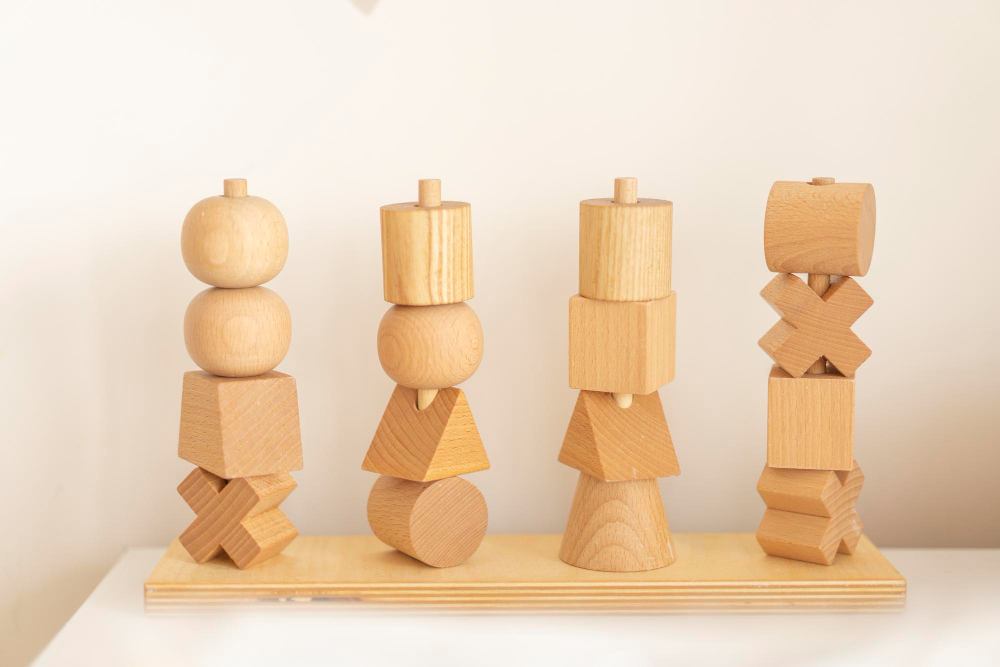 Mathematics Materials:
Montessori #math materials are designed to teach abstract mathematical concepts through hands-on activities. Key examples are:- Bead Frames (for counting, addition, and subtraction)
- Golden Beads (to understand place value)
- Number Rods (for building a sense of numeration)
-
Language Materials:
These materials aid in developing #language-skills, from #early-literacy to advanced reading and writing. For instance:- Sandpaper Letters (for learning letter shapes and phonetic sounds)
- Moveable Alphabet (for word building)
- Picture and Word Cards (for vocabulary development)
Why Are Montessori Materials Important?
Montessori materials are designed with the child's #developmental needs in mind, encouraging:
- Independence: Children learn to use materials on their own, fostering a sense of responsibility and autonomy.
- Self-Correction: Many materials are designed to provide feedback, allowing children to identify and correct their own mistakes.
- Concrete Learning: Abstract concepts, like numbers or letters, are taught using concrete materials, helping children internalize knowledge through sensory exploration.
- Concentration: By engaging with materials, children develop focus, perseverance, and problem-solving skills.
How do Montessori materials enhance child development?
Through Montessori materials, children explore math, language, science, and geography within a developmentally appropriate framework. The materials allow individualized learning trajectories and support children to work at their own pace. Evidence indicates these individualized trajectories contribute to improved academic and social-emotional outcomes; see Academic Success with Montessori Outcomes for a summary of research and practical implications.
How do I choose authentic Montessori materials?
Authentic materials are durable, sensorially distinct, and sequenced to isolate one concept (for example, size, color, or number). When selecting materials, prioritize those that:
- Are purposeful and isolate a single skill or perception (so the child can focus on one variable at a time).
- Offer a control of error (self-correction) so children receive immediate feedback without adult intervention.
- Encourage sensorial exploration (different textures, weights, sounds, or visual gradients) to build neural discrimination.
Consider whether a material is intended for a specific plane of development and whether it scaffolds to more abstract work (for example, number rods to golden beads). If you need structured guidance on selection and classroom integration, the ChildCareEd course Implementing the Montessori Curriculum Buy Now $32.00 provides frameworks for choosing materials that align with developmental objectives and inclusion strategies. Remember: authenticity is not brand-based only; it is about design, sequence, and pedagogical purpose.
How should Montessori materials be organized and presented?
Materials should be arranged to invite independent access and to minimize choice overload. Key practices include:
- Low, open shelving with only one or two variations of a material per shelf to encourage mastery before expansion.
- Materials displayed on trays or with clear handling instructions to cue independent use and care.
- Orderly presentation: place materials from simple to complex and from concrete to abstract presentations.
Present materials with a concise, three-step demonstration: (1) show the child how the material is handled, (2) model its purposeful use without over-teaching, and (3) step back to allow exploration. Regular observation will indicate when to withdraw, replace, or advance materials. These organizational and presentation practices help children develop concentration, coordination, and internalized control of error.
Where can I read practical, classroom-focused guidance on Montessori practice?
Explore related ChildCareEd articles that provide concrete ideas and classroom examples. Recommended reading:
- Montessori for Toddlers: Fostering Independence and Learning
- The Montessori Classroom: A World Designed for Discovery
- Montessori Assistant Teacher: Roles, Skills, and Training
- How to Become a Montessori Assistant Teacher
- Preschool Curriculum Types: Play-Based, Montessori, Reggio, and More
- How can I organize an effective preschool classroom?
These articles address practical implementation (shelves, grouping, presentations), roles for assistants, and curriculum alignment—useful companion reading after studying Montessori materials and their purpose.
How can I begin using Montessori materials today?
Start small and observe: select one practical-life material and one sensorial material, display each on a low tray or shelf, and offer a brief demonstration followed by time for the child to explore independently. Plan to observe each child's engagement for several days before introducing a new material. Document progress and adjust material selection based on demonstrated interest and mastery.
Summary/Conclusion: What are the key takeaways?
Montessori materials work because they are purposeful, sensorially distinct, and sequenced to support progression from concrete to abstract understanding. Integrating them requires thoughtful selection, clear presentation, and careful observation. For structured training and implementation strategies, consider the ChildCareEd course Montessori Foundations Buy Now $10.00, which provides practical steps for preparing an environment and choosing materials.
Montessori materials Buy Now $10.00 offer an invaluable way to engage children in their learning journey. With the right resources and guidance, you can create a supportive, enriching environment where children thrive. Take the next step in your Montessori journey with our resources and training at ChildCareEd!
- Implementing the Montessori Curriculum
- Montessori Made Simple: For Today's Teachers
- The Montessori Classroom: Theory to Practice
- Authentic Montessori in Action
- Montessori Foundations
- Montessori Unveiled: Demystifying the Method for Parents
- Montessori Assistant Training
- Understanding Montessori's Approach to Child Development
- Engaging Parents in the Montessori Toddler Classroom
- What is Montessori?
- The Montessori Classroom: Theory to Practice
- Understanding Montessori’s Approach to Child Development
- Understanding Montessori Materials
- Incorporating Math Instruction in the Montessori Classroom
- Montessori Education vs. Traditional Preschool
- The Importance of Hands-On Learning in Montessori Education
- Exploring the Comprehensive Montessori Curriculum
- Understanding Normalization in Montessori Education
- Understanding Montessori Materials
- Montessori Theory in Practice: Bringing Child-Centered Learning to Life
- Understanding Sensitive Periods in Montessori Education
- Shelf Work in Montessori Education: Encouraging Independence and Learning
- The Transformative Power of Montessori
- Montessori & You: A Perfect Match?
- Everyday Montessori
- Can Montessori Math Unlock a Love of Numbers?
