When you think of Montessori, what comes to mind? Wooden materials, tiny pitchers, or children concentrating deeply at a work rug? Now imagine layering in music and rhythm Buy Now $0.00—suddenly the classroom is alive with beats, movement, and joyful energy.
Music has long served as a means of cultural expression, and when it meets Montessori principles, it can invite children to listen, move, and explore sound in context. For practical Montessori cultural activity ideas, see Montessori Cultural Activities: Exploring the World Through Play and Learning  Buy Now $24.00. Educators seeking Montessori curriculum guidance can also explore Implementing the Montessori Curriculum Buy Now $32.00.
🎶 How Can Music Introduce Children to Culture?
Montessori cultural activities often introduce children to people, traditions, and perspectives beyond a child’s immediate experience. Music can support that exploration when educators provide context and avoid presenting any one example as representative of a whole region. For ideas on planning age-appropriate music experiences, see Mind's Medicine: Music in Early Childhood Buy Now $16.00.
This is exactly what our course, Montessori Cultural Activities: Exploring the World Through Play and Learning, is about: helping children connect with the richness of human culture through hands-on experiences. Music isn’t just about sound; it’s about identity, history, and community.
🥁 How Can Children Explore Rhythm Hands-On?
Children learn best by doing. Try giving children small percussion instruments—shakers, tambourines, or homemade rhythm sticks. Invite them to copy a beat, then create one of their own. You’ll notice that they aren’t just making noise; they’re practicing concentration, pattern recognition, and self-expression.
Now add a cultural dimension: choose music with reliable context and invite children to listen for a repeated beat. Ask: Does this sound fast or slow? Loud or soft? How does it make you want to move? These prompts encourage careful listening and description. For more ideas, see how to introduce children to rhythm and musical patterns.
🎤 How Can Songs Support Storytelling and Language?
Songs, chants, and call-and-response games offer opportunities to listen, repeat, and play with language. Educators can introduce a song in a language represented in the classroom community and invite families to share context when they wish. Explore practical ideas in how songs and rhymes can build young children's language skills, and read about the Montessori sensitive period for language.
Our course highlights how music and other cultural activities can support early language development by weaving in stories, traditions, and songs from around the world.
💃 How Do Movement and Rhythm Work Together?
Many children explore rhythm through movement as well as listening. Offer dancing, clapping games, or marching in place, with options for children to participate seated or standing. For more ideas about inclusive practice, see how music and movement activities can support learning and inclusion.
Imagine a class where children create a quiet rain rhythm, then choose how to respond to a piece of music. Educators can extend that exploration with cultural activities that help preschoolers learn about the world, selecting examples with care and inviting family knowledge when appropriate.
🌍 Why Does Music Matter in a Montessori Classroom?
When Montessori practice includes music, educators can create opportunities for exploration, shared attention, and cultural inquiry. To extend the cultural focus, see ideas for exploring Latin rhythms and culture with young children and guidance on celebrating Black culture and music in a child care program. Select material with care and attend to the specific context of the music.
The course Montessori Cultural Activities: Exploring the World Through Play and Learning Buy Now $24.00 offers countless ways to make mus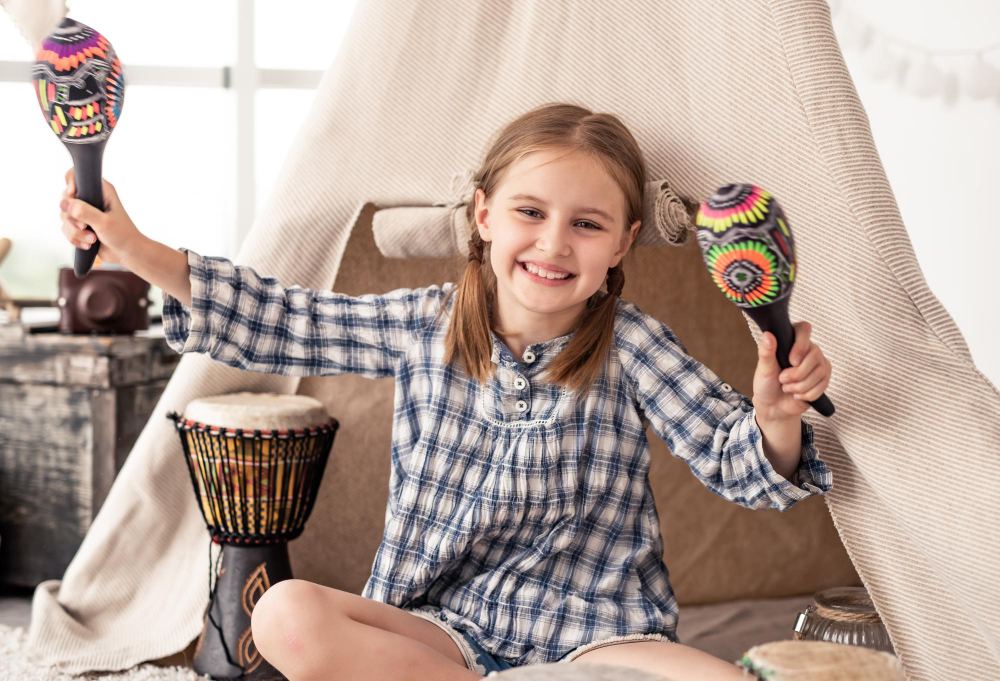 ic, art, and science come alive in your classroom. It’s about sparking curiosity and celebrating the joy of discovery.
So next time you set up your shelves, ask yourself: Where can I make room for rhythm?
How Can Educators Plan an Inclusive Music Experience?
Begin with observation rather than assuming that every child will respond to music in the same way. Some children may prefer to listen before joining, while others may communicate through movement, vocalization, or instrument play. Offer several ways to participate, including watching, choosing an instrument, keeping a quiet beat, or moving within a defined space. Provide a calm alternative for children who are sensitive to volume, and make participation inviting rather than compulsory. These adaptations connect to broader questions about how Montessori can be inclusive for every child.
Prepare a small selection of safe, accessible instruments and demonstrate how to use and return each one. Choose recordings and songs with attention to context: identify the music’s place or community of origin when known, avoid presenting a tradition as representative of an entire culture, and invite families to share songs or musical practices if they wish. Use children’s questions to guide exploration, and explain unfamiliar terms without turning cultural differences into stereotypes.
Connect the experience to Montessori practice by arranging materials where children can reach them, modeling careful use, and allowing time for repetition and independent choice. A short sequence might include listening, identifying a repeated pattern, choosing an instrument to echo it, and reflecting on how the sound changes. Adapt the duration and complexity to the children’s developmental abilities, and observe who participates, what captures attention, and whether the materials need adjustment. These observations can inform the next presentation without treating one response as a measure of musical ability.
How Can Educators Connect Music to Other Areas of Learning?
Music can serve as a bridge among curriculum areas when educators make connections explicit. Invite children to compare a recurring musical pattern with one constructed from beads or shapes, or to create a visual representation of a sound’s duration and intensity. During a song, pause for children to predict what comes next, then listen for evidence in the refrain. These experiences encourage attention, sequencing, comparison, and descriptive language while preserving music as an enjoyable activity rather than turning every song into a formal lesson.
For language and literacy, introduce a few meaningful words before a song, repeat them in context, and invite children to describe what they heard. A call-and-response format gives children opportunities to listen, wait, remember, and contribute a phrase or sound. For movement, offer a clear start-and-stop cue and enough space for varied movement choices. In a mixed-age group, children can participate at different levels: younger children may explore sound and motion, while older children may create a pattern for peers to echo.
Use brief observation notes to record children’s interests, emerging skills, and access needs. For example, note whether a child initiates a beat, attends to a change in tempo, joins a group response, or chooses a quieter form of participation. Use those observations to plan a next step, such as offering a new instrument, repeating a familiar song, or inviting a child to lead a pattern. The goal is responsive planning, not a performance standard.
How Can Music Activities Be Adapted for Different Learners?
Make the experience accessible through choices in sound, movement, materials, and social participation. Offer instruments that differ in grip, weight, and sound; place them within comfortable reach; and allow children to explore one at a time if a busy soundscape is overwhelming. Visual cues, predictable routines, and a consistent stop signal can help children anticipate transitions. For children who do not use spoken language, provide opportunities to indicate a choice through gaze, gesture, movement, or an augmentative communication system already used in the classroom.
Consider volume and sensory comfort before beginning. Introduce a sound at a moderate level, let children know when it will start and stop, and provide a quiet option nearby. Keep pathways clear for movement and adapt actions so children can participate seated or standing. These adjustments preserve the shared musical purpose while recognizing that children may access the experience differently.
After the activity, reflect on whose contributions were heard and whose preferences shaped the plan. Ask families for context when a song or instrument is unfamiliar, and follow their guidance about whether a tradition is appropriate to share. A respectful activity is specific, open to questions, and willing to acknowledge what the educator does not know. This approach helps cultural exploration remain relational rather than reducing music to decoration.
What Should Educators Observe After a Music Activity?
Use observation to assess the experience, not to rank children. Consider whether the materials were accessible, the sequence was understandable, and the sound level supported participation. Notice children’s strategies: repeating a rhythm, changing a movement, coordinating with a peer, or choosing to listen before joining. These observations can help educators decide whether to repeat the activity, simplify a transition, expand a pattern, or offer a quieter alternative.
Close with a brief reflection children can access: invite them to choose a favorite sound, show a movement, or indicate whether they would like to hear the music again. Record practical adjustments for next time, such as adding more space, offering fewer instruments at once, or including a family-suggested song. Thoughtful reflection keeps music connected to children’s interests and supports an inclusive, prepared environment.
What Is the Summary for Educators?
Montessori #music experiences can facilitate children’s exploration of #sound, #movement, #language, and #culture through purposeful choice and repetition. Design accessible activities, provide context for cultural material, and use systematic observation of children’s participation to guide responsive pedagogical planning. Prioritize exploration and culturally respectful engagement rather than performance.
✨ Stay Connected!
For more resources, professional development, and inspiration, follow ChildCareEd.com on social media. Together, we can empower early learning leaders to guide brighter futures
