What is the Montessori curriculum? The Montessori approach, developed by Dr. Maria Montessori, is a child-centered framework that integrates sequential, hands-on materials and a prepared environment to support independence, concentration, and social-emotional development. The curriculum is organized around five broad learning areas and implemented through carefully designed materials and teacher observation. Educators new to Montessori often start with practical professional development such as Montessori Made Simple: For Today's Teachers Buy Now $35.00 or Implementing the Montessori Curriculum  Buy Now $32.00 to translate philosophy into classroom practice. These trainings introduce the core areas, classroom organization, and strategies for supporting self-directed work while maintaining safety and inclusion.
How do Montessori materials and the prepared environment support learning?
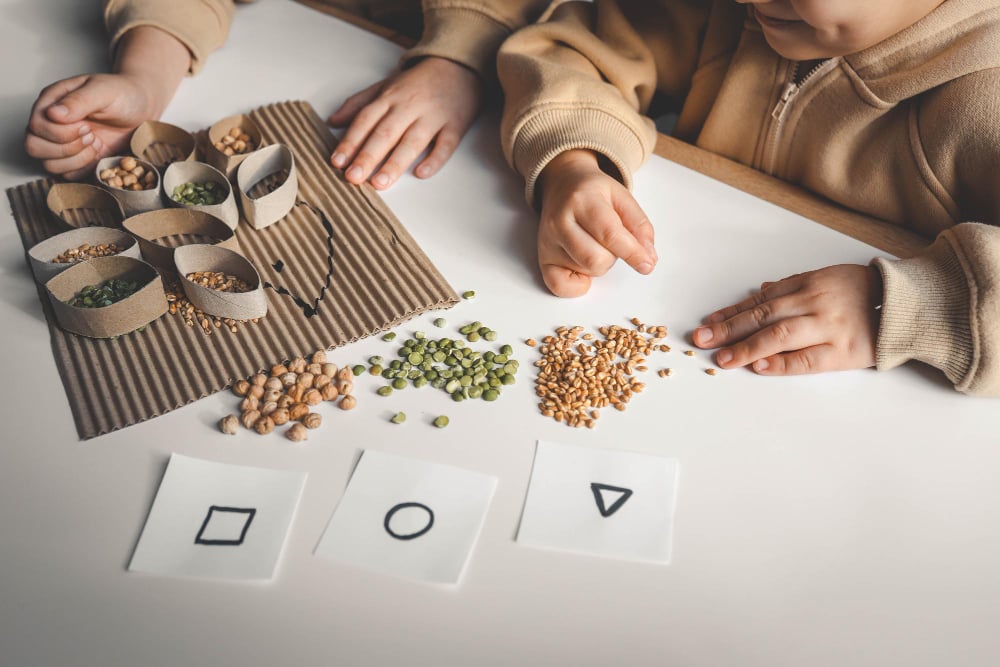
Montessori materials and the prepared environment are designed to make abstract concepts concrete and to invite purposeful exploration. Materials focus attention on one concept at a time and include a "control of error" so a child can self-correct. The environment itself—furniture scaled to the child, low shelves, clear visual order, and a limited number of choices—reduces distraction and supports sustained concentration. For teachers seeking concrete examples and step-by-step presentations of common implements, see Understanding Montessori Materials, which explains individual materials, their control of error, and recommended presentation techniques.
Sensitive periods and the planes of development guide material selection. For a deeper explanation of the Four Planes of Development and guidance on tailoring the learning environment to each stage, read Understanding Montessori’s Vision of Childhood. During these windows, children show intense interest in particular skills (for example, language or order). Educators respond by offering appropriately sequenced materials and accessible activities that match the child's developmental needs. Mixed-age groupings further support learning because younger children observe older peers and older children consolidate understanding by teaching.
Well-designed materials also scaffold transfer from concrete to symbolic thinking. For example, sensorial and mathematical materials provide hands-on practice with quantity and sequence before learners encounter abstract symbols. A thoughtfully prepared environment emphasizes beauty, real materials, and predictable routines; these features build respect for work, foster independence, and encourage social-emotional growth. For classroom-proven strategies that translate these principles into routines and gentle behavior management, see Montessori Education: Encouraging Independence and Self-Discipline. For practical design guidance, consider the ChildCareEd course The Prepared Environment: Montessori Class Design Buy Now $16.00 and the topic-focused Montessori Cultural Activities Buy Now $24.00.
See related articles for concrete examples and classroom photos: Control of Movement: Enhancing Motor Coordination and Concentration and The Montessori Classroom: A World Designed for Discovery. These pieces show how material design and classroom layout support motor control, concentration, and gradual release to independence. For practical strategies that cultivate empathy and support peaceful peer interactions in the prepared environment, see Teaching Empathy and Conflict Resolution the Montessori Way.
How can teachers implement Montessori methods in everyday classroom routines?
Implementation requires intentional routines, consistent observation, and modest changes that respect children's agency. Below are concrete steps teachers can take during a typical week. Each step is actionable in public child care and school settings.
- Observe first, then introduce: Use short, systematic observations to identify each child's interests and sensitive periods. Enroll in targeted professional development such as Mastering Observation Techniques in the Montessori Classroom Buy Now $16.00 to build a reliable observation practice.
- Arrange the shelves by sequence and independence: Group materials by domain (practical life, sensorial, language, math, cultural studies), place them on low, orderly shelves, and leave only a few choices available to prevent overwhelm.
- Teach discrete lessons and offer uninterrupted work cycles: Present a focused three-part lesson, then provide a minimum 45–60 minute uninterrupted work period so children can complete meaningful tasks and develop concentration. Share sch
 edules and expectations with staff and families to align transitions.
 - Use mixed-age grouping and peer learning: Where possible, combine age ranges. Older children model skills and deepen knowledge by mentoring younger peers. See The Montessori Classroom: Fostering Independence and a Love for Learning for strategies to manage mixed-age dynamics.
- Differentiation and inclusion: Adapt materials and tasks to support diverse learners. Short, concrete adjustments—such as modified grips, alternate pacing, or visual supports—preserve the method while meeting individual needs. Review Understanding Montessori Toddler Education for age-specific adaptations and Montessori Theory in Practice for inclusion tips.
- Reflect, coach, and iterate: Use brief reflection cycles with colleagues to refine lessons and routines. Peer coaching and classroom observation cycles turn training into practice; consider the practical schedule ideas in A Montessori Day: Calm, Curious, Connected.
These steps are practical and scalable. They keep the core Montessori commitments—child-centered work, prepared environment, and teacher as guide—while offering clear actions that teachers can apply immediately. Pair these steps with targeted courses and classroom observation to convert theory into repeatable practice.
Core Areas of the Montessori Curriculum
- Practical Life: This area focuses on daily living skills, promoting independence, coordination, and concentration. Activities include tasks like pouring, buttoning, and cleaning, which help children develop fine motor skills and a sense of responsibility.
- Sensorial: Designed to refine the senses, sensorial materials assist children in distinguishing, categorizing, and relating new information to what they already know. This foundation is crucial for future learning in subjects like #math and #language.
- Language: The Montessori language curriculum emphasizes oral #language-development, vocabulary enrichment, and the mechanics of reading and writing. Phonetic awareness is cultivated through tactile materials, aiding in the seamless transition to literacy.
- Mathematics: Using concrete materials, children explore mathematical concepts such as numeration, place value, and the four basic operations. This hands-on approach ensures a deep understanding of abstract ideas.
- Cultural Studies: This broad area includes geography, science, art, and music, exposing children to diverse #cultures and the natural world. It fosters curiosity and respect for global diversity.
Integrating Arts and Culture
In addition to the core areas, the Montessori curriculum places a strong emphasis on arts and culture. Children engage in artistic activities that encourage creativity and self-expression, while cultural studies provide insights into various traditions and histories, promoting global awareness.
Professional Development Opportunities
Educators seeking to deepen their understanding of the Montessori curriculum can benefit from specialized training programs. For instance, Montessori4Teachers.com offers courses that delve into the intricacies of Montessori education, providing valuable insights and practical strategies, including Implementing the Montessori Curriculum Buy Now $32.00.
Additional Resources
For comprehensive materials supporting Montessori #educators, Montessori4Teachers offers a variety of resources tailored to #early-childhood education. These include activity guides and tools to enhance #classroom #engagement such as Conflict Resolution Solution Cards.
Summary: How does the Montessori curriculum support whole-child development?
Montessori organizes learning around carefully sequenced, concrete experiences that cultivate independence, cognitive flexibility, and social competence. The five core areas—practical life, sensorial, language, mathematics, and cultural studies—work together so children move from concrete mastery to abstract reasoning. Teachers use observation to individualize instruction and to create a prepared environment that supports sustained concentration and intrinsic motivation.
For teachers seeking next steps: enroll in a foundational course, pair training with classroom observation cycles, and use the linked ChildCareEd articles and classroom resources to adapt materials and routines to your learners. Consistent reflection and coaching help ensure that Montessori principles produce measurable learning gains while supporting inclusion and classroom safety.
- The Montessori Classroom: Theory to Practice
- Teach the Montessori Way: A Practical Guide
- Montessori Foundations
- Understanding Montessori's Approach to Child Development
- Intro to Montessori: Philosophy, Principles, and Practices
- Montessori Cultural Activities: Exploring the World Through Play and Learning
- The Montessori Assistant's Toolkit
- The Prepared Environment: Montessori Class Design
- Raising Peaceful Learners: The Montessori Advantage
- Understanding Montessori’s Approach to Child Development
- Incorporating Math Instruction in the Montessori Classroom
- Exploring the Comprehensive Montessori Curriculum
- Focus on Nature and Real-World Experiences in Montessori Education
- Understanding Montessori Materials
- Understanding the Basis and Benefits of Montessori Education
- Montessori & You: A Perfect Match?
- Understanding Montessori’s Vision of Childhood
- A Montessori Day: Calm, Curious, Connected
