Latest Blog & News in English
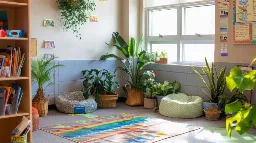
🌱 Can Montessori Help Heal Environmental Anxiety in Today’s Children?
10/13/2025Understanding the Emotional Landscape of Today’s Child Children today are growing up in an age of information—and often, that means constant exposure to news about climate change, pollution, and #natural-disasters. Many #educators are noticing a rise in what psychologists call eco-anxie... 🌱 Can Montessori Help Heal Environmental Anxiety in Today’s Children?

Can Montessori Math Unlock a Love of Numbers?
09/18/2025For many adults, the word math brings back memories of worksheets, drills, and maybe even a little frustration. But in a Montessori #classroom, #math looks—and feels—very different. Instead of abstract numbers on paper, children handle golden beads, lay out colorful bead chains, and expl... Can Montessori Math Unlock a Love of Numbers?

Montessori Math vs. Traditional Math: Key Differences
11/18/2025Math can feel magical—or miserable—depending on how it’s taught. While traditional #math lessons often rely on memorization, worksheets, and “right-or-wrong” expectations, Montessori math takes a completely different approach. It invites children to touch, explore, and ... Montessori Math vs. Traditional Math: Key Differences

What If Confidence Came Naturally? Montessori Knows How
10/07/2025Every #parent and #teacher dreams of seeing that spark in a child’s eyes — the look of “I can do it!” That quiet confidence doesn’t appear overnight; it’s #nurtured through trust, independence, and meaningful experiences. And that’s exactly where Montessori ... What If Confidence Came Naturally? Montessori Knows How

Training Process: How it Works
04/16/2026At Montissori4Teachers, we provide professional development training for Montessori educators that’s simple, flexible, and designed for real-life use. Whether you’re new to the field or a seasoned educator, our courses help you meet licensing and annual training in a way that fits y... Training Process: How it Works

Start Your Montessori Training: Requirements, Hours, and What You Need to Know
04/01/2026If you're a Montessori #educator, understanding your training requirements is essential—not just for compliance, but for professional #growth and #classroom success. Whether you're new to Montessori or maintaining your credentials, this guide will help you understand: AMS 50-hour professio... Start Your Montessori Training: Requirements, Hours, and What You Need to Know
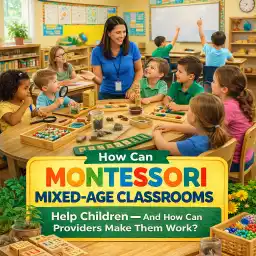
How can Montessori mixed-age classrooms help children — and how can providers make them work?
03/27/2026Introduction Montessori mixed-age classrooms can feel like a warm family. When they work well, children learn from each other, grow in confidence, and build real skills. This article is for directors and child care providers who want clear, practical steps to make mixed-age Montessori work in your ... How can Montessori mixed-age classrooms help children — and how can providers make them work?
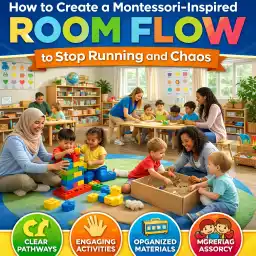
How can a Montessori-inspired room flow stop running and chaos?
03/06/2026Introduction — Why does room flow matter? A classroom that moves well helps children feel safe, calm, and ready to learn. Good room flow lowers the chance they will run, bump into each other, or get upset. Small design choices and clear routines make a big difference. For ideas on calm classr... How can a Montessori-inspired room flow stop running and chaos?
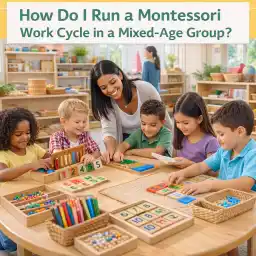
How do I run a Montessori work cycle in a mixed-age group?
02/27/2026Introduction: What is a Montessori work cycle and why does it matter? A Montessori work cycle is an uninterrupted block of time when children choose and do hands-on "work" for deep learning. Dr. Montessori found that long, quiet blocks of time help children build #concentration and confidence. You ... How do I run a Montessori work cycle in a mixed-age group?
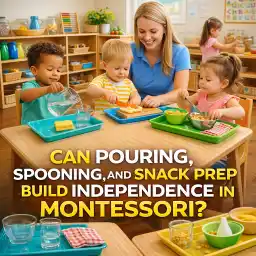
Can Pouring, Spooning, and Snack Prep Build Independence in Montessori?
02/27/2026Introduction This short guide is for child care leaders and teachers who want simple, practical ways to help children be more independent. In Montessori settings, small everyday tasks like pouring, spooning, and preparing snacks are powerful learning tools. These activities build coordination, conf... Can Pouring, Spooning, and Snack Prep Build Independence in Montessori?
