Montessori education is centered around fostering independence, hands-on learning, and self-directed exploration. One of the key elements of a Montessori environment is shelf work—a carefully organized system where learning materials are placed on open shelves for children to #freely choose and engage with at their own pace. This method #nurtures a child’s curiosity, autonomy, and love for learning while promoting order and responsibility.
For practical training, consider ChildCareEd's Montessori Foundations  Buy Now $10.00 and Mastering the Montessori Prepared Environment Buy Now $16.00 courses, which cover materials, environment design, and strategies for fostering independence.
What is the purpose of shelf work in Montessori classrooms?
Shelf work is designed to encourage independent learning and self-discipline. By arranging materials on low, accessible shelves, children can see their choices and select activities that interest them. This setup aligns with Montessori’s belief in allowing children to learn through experience rather than passive instruction.
Key benefits of shelf work include: encouraging decision-making, developing a sense of order, enhancing concentration and focus, promoting responsibility for materials, and supporting individualized learning as children progress at their own pace.
How are Montessori shelves organized?
A Montessori shelf is carefully curated to support a child’s #development in various areas. The materials are arranged from simple to complex, guiding children through a logical learning progression. Typically, shelves include: (see classroom design examples)
What materials are placed on Montessori shelves?
Practical life: Activities such as pouring, spooning, buttoning, and sweeping refine fine motor skills and foster independence.
Sensorial: Materials that refine perception and categorization, including towers, color tablets, and sound cylinders, support cognitive development and classification skills. See Understanding Montessori Materials for a detailed guide.
Language and literacy: Sandpaper letters, movable alphabets, and phonetic objects support early literacy and phonemic awareness.
Mathematics: Number rods, golden beads, and spindle boxes introduce concrete foundations for numeric concepts and place value understanding.
Cultural and science: Geography puzzles, botany cards, and zoology models invite children to explore the wider world and connect classroom learning to real-world contexts.
How can you implement shelf work at home?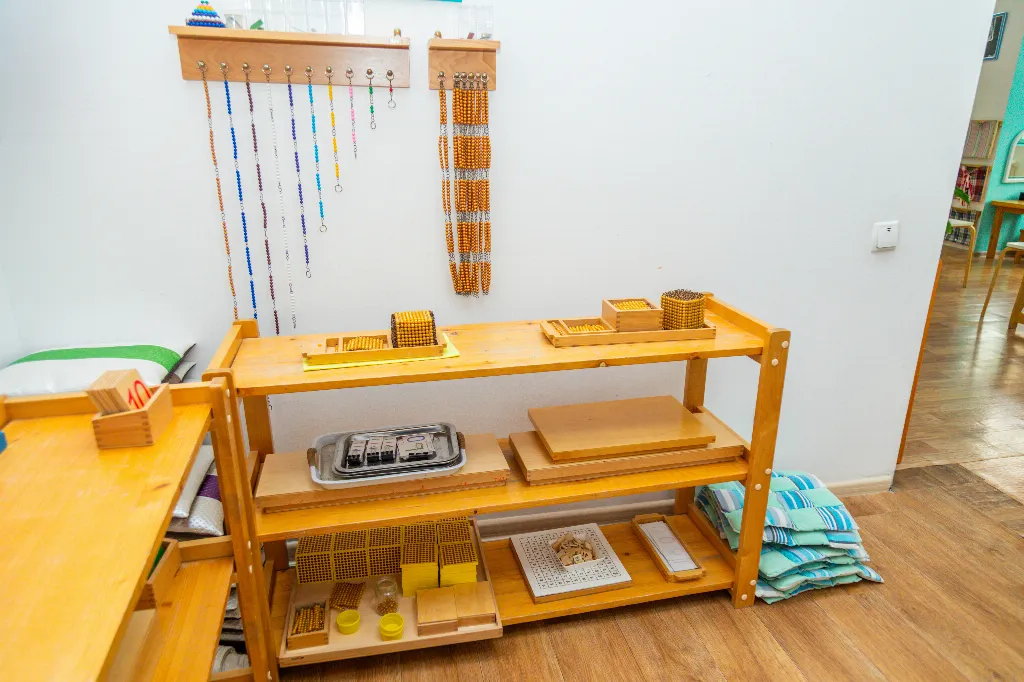
Montessori shelf work is not limited to #classrooms—it can also be adapted for home learning. Parents can create a Montessori-inspired learning space by: For practical, step-by-step instructions and concrete shelf-arrangement examples to set up a child-accessible Montessori shelf at home, see how to set up a Montessori shelf at home.
- Using low, child-accessible shelves to display materials neatly.
- Rotating activities to maintain interest and prevent overwhelm.
- Providing hands-on, purposeful learning materials.
- Encouraging children to complete work cycles and return materials when finished.
- Observing children’s interests and adapting the environment accordingly.
What practical tips make shelf work effective?
To maximize the effectiveness of shelf work, #educators and #parents should consider the following:
- Keep the environment clutter-free – A well-organized, minimalist setup helps children focus.
- Offer a variety of materials – Include activities that promote fine motor skills, literacy, math, and #sensory exploration.
- Model how to use materials – Demonstrate the correct way to engage with materials before allowing independent work.
- Encourage independence – Allow children to explore materials without unnecessary adult intervention.
- Observe and adjust – Regularly update materials based on a child’s progress and interests. See Understanding Normalization for guidance on interpreting observation and adjusting the environment.
How should educators assess learning from shelf work?
Assessment in the Montessori classroom is primarily observational and formative. Begin by establishing simple learning targets for commonly used materials (for example: the child can complete a three-step pouring activity without spilling; the child can trace sandpaper letters with correct left-to-right motion). Use brief, objective notes during work cycles: date, material, observed behavior (concentration, repetition, control of error), and next-step recommendation. Maintain a running portfolio with dated samples (photos of work setups, short video clips of extended concentration, and photographed sequencing). A practical observation template might include: 1) WHAT the child chose, 2) HOW they engaged (independently/with help), 3) DURATION of focused work, 4) EVIDENCE of learning (error correction, sequencing), and 5) NEXT MATERIAL or adaptation.
Use these notes to plan material rotations and small-group lessons. Look for patterns: repeated choice of a material signals interest or an emerging sensitive period; refusal or frustration may indicate a skill gap requiring scaffolding. Share concise observational summaries with families during conferences and with colleagues when planning transitions or individualized supports.
How can shelf work be adapted for mixed-age groups and diverse learners?
Shelf work is especially effective in mixed-age classrooms because materials are self-correcting and scaffold naturally. To adapt for diverse learners: limit open choices by placing 3–4 appropriate materials on a dedicated shelf for a child who needs simplified choices; provide visual step cards or tactile cues for children requiring structured prompts; break multi-step activities into smaller sequenced trays when fine motor or executive-function challenges are present. For sensory needs, offer alternative materials (heavier handles, textured grips) and create a quiet choice area where a child can work with reduced auditory input. Collaborate with specialists and families to translate observations into meaningful accommodation plans—document adaptations and note progress at regular intervals.
Where can I find Montessori training and resources?
ChildCareEd offers several courses that are directly relevant to shelf work and prepared environments. Consider Mastering Observation Techniques in the Montessori Classroom Buy Now $16.00 to sharpen assessment skills, Montessori Foundations Buy Now $10.00 for an overview of the five learning areas, and Montessori Assistant Training Buy Now $250.00$230.00 for practical classroom support strategies. For further reading on implementing materials and designing a prepared environment, see Understanding Montessori Materials and The Purpose of Practical Life.
What are the key takeaways about shelf work in Montessori education?
Shelf work in Montessori education empowers children to take charge of their learning in an organized, engaging, and structured environment. By making materials easily accessible and promoting self-directed exploration, this method fosters independence, responsibility, and a lifelong love of learning. Whether in a classroom or at home, incorporating shelf work supports a child’s natural curiosity and growth while instilling important life skills. For guidance on applying these same principles with older children and supporting curiosity and responsibility in elementary settings, see Elementary Montessori: Fostering Curiosity & Responsibility.
How can educators and families apply shelf work in their daily practice?
Use shelf work as a practical framework for daily practice: select a small number of purposeful, self-correcting activities, rotate materials based on concise observation notes, and scaffold choices for learners who need simplified options. Prioritize clear, minimal demonstrations and allow children extended uninterrupted work cycles so concentration can develop. Record brief objective observations (material chosen, degree of independence, duration, evidence of control) to guide material rotations and small-group lessons. Share short portfolios or observation summaries with families and suggest simple home adaptations to reinforce continuity across settings.
In mixed-age or diverse classrooms, zone shelves by developmental skill rather than strict age, add visual sequencing supports for multi-step tasks, and document adaptations to monitor progress. These practical steps — observe, adapt, and document — produce measurable gains in autonomy and engagement. Consider targeted professional development such as Montessori Foundations or Mastering Observation Techniques to strengthen implementation and ensure alignment with program goals.
Stay updated with more Montessori-inspired learning tips by following us on Instagram.
- Montessori Education vs. Traditional Preschool
- Emphasis on Movement in Montessori Education
- Intrinsic Motivation in Montessori Education
- The Purpose of Practical Life in Montessori Education
- Montessori Theory in Practice: Bringing Child-Centered Learning to Life
- The Montessori Classroom: Fostering Independence and a Love for Learning
- Montessori Education: Encouraging Independence and Self-Discipline
- Shelf Work in Montessori Education: Encouraging Independence and Learning
- Understanding the Basis and Benefits of Montessori Education
- Montessori & You: A Perfect Match?
- Montessori for Infants: Nurturing Independence from the Start
- How to Set Up a Montessori Shelf at Home
- Montessori and Positive Discipline: A Balanced Approach
