In Montessori education, "normalization" describes a developmental process in which children build concentration, independence, and a sustained love for purposeful work. This steady change comes from repeated engagement in meaningful activities inside a carefully prepared environment. For practical classroom strategies, see the courses Montessori Made Simple Buy Now $35.00 and The Prepared Environment: Montessori Class Design  Buy Now $16.00. Normalization is a core Montessori idea showing how children flourish when the environment supports their developmental needs. For a broader look at Montessori's effectiveness in fostering independence, a love of learning, and social skills, see The Transformative Power of Montessori. #concentration #independence
What is normalization in Montessori education?
Dr. Maria Montessori introduced the concept of normalization to describe the process by which children, through engaging in self-chosen, meaningful work, develop inner discipline, peace, and the ability to concentrate. This state is not about making children "normal" in a conventional sense but about helping them realize their fullest potential. When normalized, children exhibit characteristics such as:
- Deep Concentration: The ability to focus intently on tasks.
- Love for Work: Finding joy and satisfaction in engaging activities.
- Self-Discipline: Regulating their own behavior and actions.
- Sociability: Interacting harmoniously with peers and adults.
These traits emerge naturally when children are immersed in an environment that meets their developmental needs. For broader context on Montessori philosophy and the child-centered approach, see What is Montessori?
What role does the prepared environment play in normalization?
A key element in facilitating normalization is the prepared environment—a space meticulously designed to support independent learning and exploration. In a Montessori #classroom, the environment offers:
- Order and Accessibility: Materials are organized systematically, allowing children to locate and return them independently.
- Purposeful Materials: Each item serves a specific educational function, enticing children to engage and learn.
- Freedom within Limits: Children choose activities based on their interests within a framework that promotes respect and responsibility.
This setting empowers children to take charge of their learning journey, fostering intrinsic motivation and self-confidence. For a deeper look at how intrinsic motivation drives engagement and lifelong learning in Montessori classrooms, see Motivation’s vital role in how children engage with learning.
How does normalization support concentration and deeper learning?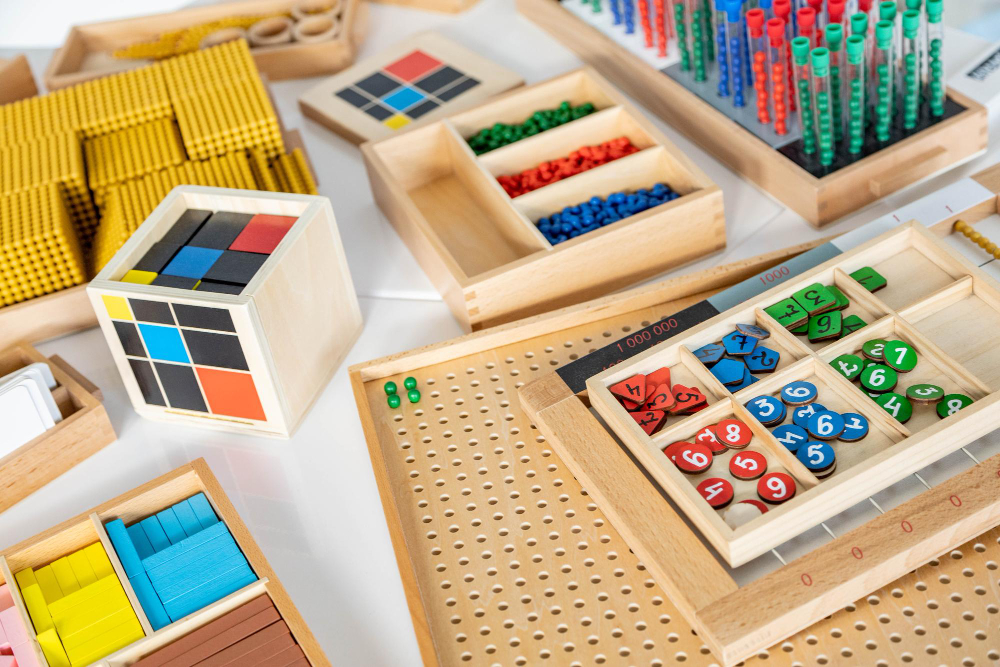
Normalization directly supports sustained attention, which is a prerequisite for higher-order learning. When children choose work that matches their developmental readiness, tasks offer intrinsic feedback and clear sensory cues; this reduces frustration and enables repetition, the engine of skill acquisition. Sustained focus on a single activity strengthens executive functions such as working memory and cognitive flexibility. In practice, a child who works for extended periods with a sensorial material refines perceptual discrimination and self-checking; those micro-skills transfer to academic tasks later. For classroom strategies that make learning hands-on and tactile, see The Importance of Hands-On Learning in Montessori Education. Teachers should plan materials with progressive challenges so concentration yields visible progress and deeper learning. Planning for and protecting uninterrupted work periods—blocks of time when children can pursue chosen work without interruption—directly supports sustained concentration and helps those progressive challenges translate into deeper learning.
How do I arrange the prepared environment to encourage normalization?
Arrange the environment so each area signals its purpose: order, limited choices, and accessible materials. Use low shelves, clearly defined work rugs, and a small number of exemplars for each activity to minimize distraction. Organizing shelf work so children can independently choose, return, and care for self-correcting activities is a practical way to build autonomy and concentration; see Shelf Work in Montessori Education: Encouraging Independence and Learning for examples and setup tips. Rotate materials thoughtfully: keep core, self-correcting items available while introducing new ones only when children show readiness. Include practical life and sensorial activities near the entrance to scaffold independence and reduce adult intervention. For guidance on selecting and presenting materials, consult Understanding Montessori Materials and consider the course Montessori Foundations Buy Now $10.00 for implementation details. Consistency in layout and routines helps children orient themselves and protects concentrated work.
How does normalization develop in stages?
Normalization is a gradual process that unfolds in stages:
- Initial Exploration: Children are introduced to the environment and begin exploring materials, often displaying curiosity mixed with brief attention spans. Read more about adaptations for young learners in Understanding Montessori Toddler Education.
- Development of Concentration: Through repeated engagement with activities that captivate their interest, children start to exhibit longer periods of focus.
- Emergence of Self-Discipline and Sociability: Sustained concentration #leads to inner satisfaction, resulting in self-discipline and positive social interactions.
It's essential to recognize that each child progresses through these stages at their own pace, guided by their unique developmental timeline.
How can educators support normalization in daily practice?
Educators and caregivers play a pivotal role in supporting the normalization process. Effective strategies include: For guidance on common obstacles teachers encounter when implementing Montessori methods and practical solutions for addressing them, see challenges in implementing Montessori practices and how to address them.
- Observing Without Interference: Careful observation helps adults understand each child's needs and interests, allowing for appropriate guidance without unnecessary interruption. See Understanding Intrinsic Motivation in Montessori Education for strategies to translate observation into supportive action.
- Providing Appropriate Materials: Offering a variety of materials that align with children's developmental stages encourages exploration and learning.
- Modeling Desired Behaviors: Demonstrating respect, patience, and a love for learning sets a positive example for children to emulate.
- Establishing Consistent Routines: Predictable schedules provide a sense of security, enabling children to focus on their activities with confidence.
By implementing these practices, adults create an environment conducive to the child's natural development.
Educators who want practical, role-specific guidance on supporting normalized work and managing classroom routines can consult Becoming a Montessori Assistant Teacher for step-by-step responsibilities and examples of effective assistant practice.
What long-term benefits can normalization produce?
The process of normalization yields numerous long-term benefits, including:
For a broader overview of Montessori's educational advantages and how normalization supports independence and a sustained love of learning, see Understanding the Basis and Benefits of Montessori Education.
- Enhanced Academic Achievement: Children who can concentrate deeply are better equipped to grasp complex concepts and excel academically. For classroom design that supports discovery-driven academic work, see The Montessori Classroom: A World Designed for Discovery.
- Emotional Resilience: A strong sense of self-discipline and inner peace enables children to navigate challenges with confidence.
- Positive Social Relationships: Normalized children tend to exhibit #empathy, cooperation, and effective communication skills.
- Lifelong Love for Learning: Early experiences of joyful, self-directed learning foster a continuous passion for education.
These outcomes underscore the profound impact of normalization on a child's overall development.
Further Resources
For those interested in delving deeper into the concept of normalization and its application in Montessori education, consider exploring the following resources:
- Training Opportunity: Inclusive Montessori: Supporting Diverse Learners in the Classroom Buy Now $16.00 – With this training, you’ll transform your Montessori environment into a thriving space where every child feels valued and empowered to succeed. Step into the future of education with the tools to create a truly inclusive classroom! For a clear roadmap to training pathways, certification options, and professional development for aspiring teachers, see Unlocking Your Path to Montessori: The Ultimate Guide to Becoming an Educator.
- Educational Resource: Classroom Behavior Poster – This poster serves as a visual reminder of the expected conduct and rules within the classroom.
- Informative Article: Understanding Multi-Age Classrooms in Montessori Education – This article delves into the principles, benefits, and practical applications of multi-age groupings in Montessori education.
Engaging with these materials can provide valuable guidance for educators and parents aiming to support children's developmental journeys. For practical tips on assistant roles and family engagement, see How to Become a Montessori Assistant Teacher. To help communicate the Montessori advantage and attract families, see how to highlight your program's strengths and engage prospective parents.
For more insights and updates on Montessori education, follow us on Instagram.
What are the key takeaways and next steps?
In conclusion, normalization is a transformative process central to Montessori education, enabling children to develop essential life skills through meaningful engagement. By fostering environments that support this journey, we empower children to reach their fullest potential, laying the foundation for a lifetime of growth and fulfillment. To act on this, start by reviewing your classroom layout, prioritize a few self-correcting materials, and track concentrated work through observation. For step-by-step implementation, consider the ChildCareEd courses linked above.
- The Montessori Classroom: Theory to Practice
- Authentic Montessori in Action
- Implementing the Montessori Curriculum
- Montessori Foundations
- Mastering Observation Techniques in the Montessori Classroom
- Montessori Cultural Activities: Exploring the World Through Play and Learning
- Mindful Supervision: Balancing Safety & Independence in Montessori
- Raising Peaceful Learners: The Montessori Advantage
- What is Montessori?
- Understanding Montessori’s Approach to Child Development
- Montessori Education vs. Traditional Preschool
- Understanding Multi-Age Classrooms in Montessori Education
- Focus on Nature and Real-World Experiences in Montessori Education
- Understanding Normalization in Montessori Education
- Understanding Peer Learning in Montessori Education
- Understanding Sensitive Periods in Montessori Education
- Shelf Work in Montessori Education: Encouraging Independence and Learning
- The Transformative Power of Montessori
- Understanding the Basis and Benefits of Montessori Education
- Montessori Magic: Why Parents Choose It & How Your Program Can Shine
- Montessori & You: A Perfect Match?
- Understanding Montessori’s Vision of Childhood
- Montessori and Positive Discipline: A Balanced Approach
