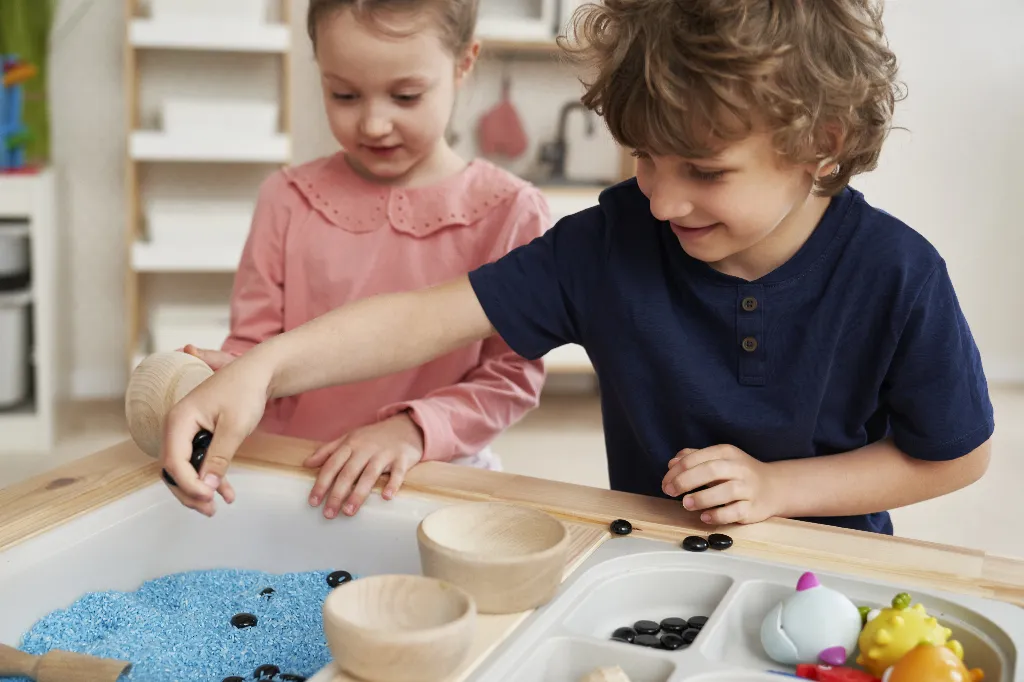
 Montessori education is grounded in the idea that children learn best through direct experience and active #engagement with their environment. Dr. Maria Montessori linked movement and cognition: hands-on activities stimulate cognitive #development by letting children explore concepts through touch and movement. Working with carefully designed materials helps children understand abstract ideas, practice problem solving, and develop independence. These processes support a lifelong love of learning. For practical training that helps educators implement these methods, see ChildCareEd courses such as Montessori Made Simple Buy Now $35.00 and The Prepared Environment
  Buy Now $16.00. For a concise overview of the Montessori child-centered approach, see What is Montessori?
What is the philosophy behind hands-on learning?
Dr. Montessori observed that children learn best when they can touch and manipulate objects. She believed that "What the hand does, the mind remembers," highlighting the connection between physical activity and cognitive development. This philosophy is evident in Montessori #classrooms, where learning materials are designed to be interactive and self-correcting, enabling children to learn through their own actions and decisions.
What are the key features of Montessori materials?
Montessori materials are meticulously #crafted to support hands-on learning. Some of their distinctive features include:
- Self-Correction: Materials are designed so that errors are evident to the child, promoting problem-solving and independent thinking.
- Progression from Simple to Complex: Activities are structured to advance from basic to more intricate tasks, aligning with the child's #developmental stages.
- Isolation of Difficulty: Each material focuses on a single concept or skill, allowing the child to master it without unnecessary distractions.
- Aesthetic Appeal: Attractive and well-maintained materials draw children's interest and encourage engagement.
What are examples of hands-on Montessori materials?
Several materials exemplify the hands-on approach in Montessori education:
- Sensorial Materials: Tools like the Pink Tower and Brown Stair help children discern differences in size and shape, refining their visual and tactile senses.
- Mathematics Materials: The Golden Beads allow children to physically represent units, tens, hundreds, and thousands, providing a concrete understanding of the decimal system.
- Language Materials: Sandpaper Letters enable children to trace and feel the shape of each letter, linking tactile and visual learning to phonetic sounds.
- Practical Life Materials: Activities such as pouring, spooning, and buttoning develop fine motor skills and teach children how to perform everyday tasks independently.
What benefits does hands-on learning provide in Montessori education?
Implementing hands-on learning through Montessori materials offers numerous advantages:
- Enhanced Engagement: Active participation with materials captures children's interest and sustains their attention.
- Deepened Understanding: Manipulating objects helps children grasp abstract concepts by relating them to concrete experiences.
- Development of Fine Motor Skills: Hands-on activities strengthen coordination and dexterity essential for writing and other tasks.
- Encouragement of Independence: Self-correcting materials empower children to assess their work and make improvements without relying on adult intervention.
- Fostering of Intrinsic Motivation: The satisfaction of discovery and mastery motivates children to pursue further learning.
How can educators implement hands-on learning effectively?
For #educators aiming to incorporate hands-on learning effectively, professional development is crucial. Montessori4Teachers.com offers a range of training programs designed to equip #teachers with the necessary skills and knowledge.
Which training programs are recommended?
- Intro to Montessori: Philosophy, Principles, and Practices Buy Now $24.00: Discover the revolutionary philosophy of Maria Montessori, explore her groundbreaking contributions to education, and uncover the core principles that make her approach timeless.
- Raising Peaceful Learners: The Montessori Advantage Buy Now $16.00: This course delves into the five guiding principles of Montessori, like respect for the child and the power of prepared environments.
These programs are designed to enhance educators' understanding and implementation of hands-on learning strategies in their classrooms.
How do you choose and adapt Montessori materials for diverse learners?
Selecting and adapting Montessori materials requires careful observation, intentional scaffolding, and sensitivity to each child’s developmental plane. Start by observing children to identify current interests and the "sensitive periods" they are in; this observation drives effective material selection and sequencing. For example, a child showing interest in order and movement may benefit from Practical Life activities that refine motor control and concentration, while a child focused on language will engage more readily with Sandpaper Letters or tactile phonics activities.
Differentiate materials by isolating difficulty and providing graduated supports. Offer simpler versions of an activity first, then introduce extensions that add complexity or abstraction. For mixed-age groups, present identical materials at varying challenge levels: a younger child may explore sensorimotor properties while an older child investigates quantitative relationships. Use the environment to promote accessibility—keep materials reachable, clearly organized, and labeled so children can select and return work independently.
Inclusion requires adaptation. For children with fine motor delays, provide modified tools (larger handles, adapted grips) and parallel activities that build prerequisite skills. For children who need extra repetition, create short, frequent practice opportunities that maintain engagement without requiring adult-led instruction. Record observations and adjust pacing: a material that is self-correcting for one child may need adult demonstration for another.
For practical examples and classroom design guidance, see related ChildCareEd articles: The Importance of Hands-On Learning in Montessori Education, The Transformative Power of Montessori, The Montessori Classroom: Fostering Independence and a Love for Learning, and Unlocking the Power of Practical Life: A Montessori Foundation. These articles provide concrete implementation ideas, sample lessons, and adaptation strategies to support diverse learners.
Finally, pair observation with reflection and peer collaboration. Use brief notes or a simple observation log to track progress and to inform material rotation. Regular team discussions help refine choices and ensure consistency across caregivers.
Where can educators find additional Montessori resources?
Beyond training, access to quality resources is vital for continuous improvement. Montessori4Teachers.com provides various materials to assist educators:
- Development of Social and Emotional Skills in Montessori Education: This article discusses how Montessori education aids in the cultivation of social and emotional competencies. This method creates an environment where children can naturally develop these essential life skills.
- Montessori Math Lesson: Introduction to Numbers (1-10): This child-centered lesson encourages self-directed learning and builds confidence in foundational #math skills through repetition, exploration, and hands-on engagement.
Utilizing these resources can enhance the effectiveness of Montessori educators in promoting hands-on learning.
What is the takeaway and summary for hands-on learning in Montessori?
Hands-on learning is a cornerstone of Montessori education, enabling children to engage directly with their environment and materials. This tactile approach enhances cognitive development, builds fine motor skills and independence, and fosters confidence and a lifelong passion for learning. To implement these practices, audit your prepared environment for accessible, self-correcting materials, observe sensitive periods to guide material selection, and pursue targeted professional development to strengthen classroom delivery.
For more insights and resources on implementing hands-on learning in Montessori education, visit Montessori4Teachers.com.
Stay connected with the Montessori community and access additional resources by following us on Facebook.
- Authentic Montessori in Action
- Implementing the Montessori Curriculum
- Montessori Foundations
- Mastering Observation Techniques in the Montessori Classroom
- Montessori in Context: Decoding Educational Theories
- Montessori Unveiled: Demystifying the Method for Parents
- Engaging Parents in the Montessori Toddler Classroom
- Raising Peaceful Learners: The Montessori Advantage
- What is Montessori?
- The Importance of Hands-On Learning in Montessori Education
- Intrinsic Motivation in Montessori Education
- Focus on Nature and Real-World Experiences in Montessori Education
- The Purpose of Practical Life in Montessori Education
- Understanding Normalization in Montessori Education
- The History of Montessori
- Montessori For All
- Long-Term Benefits for Students: Montessori Education
- Motivation’s vital role in how children engage with learning
- Montessori Education: Encouraging Independence and Self-Discipline
- Unlocking Your Path to Montessori: The Ultimate Guide to Becoming an Educator
- Understanding the Basis and Benefits of Montessori Education
- Montessori & You: A Perfect Match?
